

Following a high-octane performance at the Sick New World Festival in Las Vegas, the production team for composer/musician Danny Elfman has revealed the technical backbone behind their massive live sound: the Neumann Miniature Clip Mic (MCM) system. Tasked with capturing a 121-input show that bridges the gap between cinematic orchestral scores and industrial rock, Front of House Engineer Ryan John has standardized the MCM 114 series to ensure studio-grade isolation on the world’s loudest stages.
The Danny Elfman live experience is a masterclass in genre-hopping, transitioning instantly from the haunting, cinematic swells of Edward Scissorhands to the aggressive industrial metal of Elfman’s solo work. For John, the challenge lies in the “sonic glue” — ensuring the show feels like a singular performance despite the drastic tonal shifts.
|
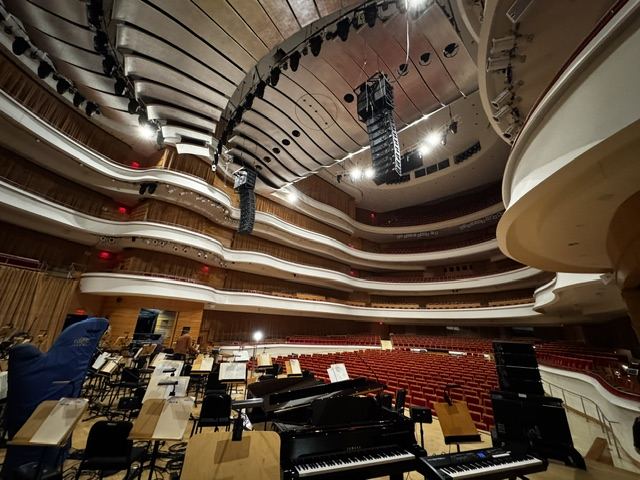
The ultimate stress test arrived at the Sick New World Festival earlier this year. Performing alongside heavyweights like System of a Down, Elfman’s set featured a powerhouse backing band including Stu Brooks, Robin Finck, and Josh Freese of Nine Inch Nails and Reba Meyers from Code Orange. In this high-decibel environment, stage bleed is a constant threat.
John noted that the MCM KK 14 capsule’s cardioid pattern was a strategic “secret weapon” compared to traditional hypercardioid options. “Hypercardioid mics have a lobe directly behind them that picks up sound. When you build an orchestra in an arc, those rear lobes point straight at the drum kit,” John said. “With the MCM KK 14, the biggest portion of the rejection pattern is 180 degrees from the instrument — exactly where the drummer and guitar amps are. It allowed me to pull up the cellos without my snare sound changing significantly. It gave me back my creative control.”
|
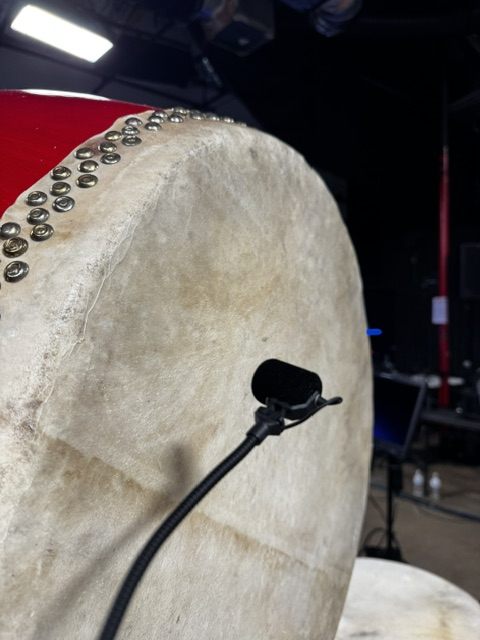
An Elfman production is highly fluid, capable of shifting from a traditional, sit-down symphonic hall format to a chaotic, high-decibel festival set. Because these environments are polar opposites, the mix strategy has to change entirely. In a pristine symphony hall, the acoustic space does the heavy lifting, allowing for a mix that relies on up to 70% natural room ambience. On a dry, open-air festival stage, the team must build that space from scratch using massive automation — running a tight 80% live input to 20% artificial reverb ratio to emulate that same cinematic depth without picking up overwhelming stage bleed.
Moving this complex setup from pristine symphony halls to the Las Vegas Festival Grounds required gear that was as rugged as it was refined. Deploying more than 80 MCM 114 microphones, the team found that the modularity and mechanical design of the system provided a superior return on investment across every show format.
“They are polar opposites: a beautiful symphony hall and a dusty field across from casinos,” said John. “But the MCM clips are made of metal; they are robust. We have dropped them off stages and stepped on them — things we thought would break them — and they just kept working. You cannot say the same for many other mics in this form factor.”
|
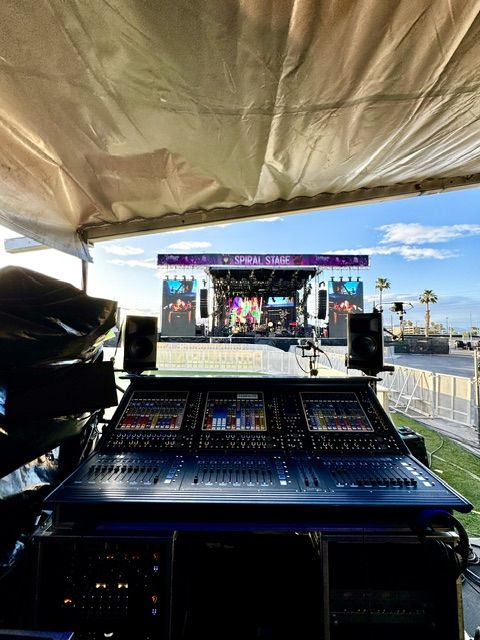
A 17-minute line check for a 121-input production is a massive claim, but one John attributes to the reliability of the Neumann capsule. Because the MCM system uses the same capsule across various instruments — from cellos to trumpets — the crew can move with lightning speed.
“Because we trust the capsule, all we need to do is confirm signal,” John explained. “Our techs walk the stage with a Bluetooth speaker playing pink noise. We know the tonality will be there and the signal will be noise-free. Plus, having a universal capsule means we don’t need unique spares for every section. It’s the most efficient version of an investment we could do.”
|
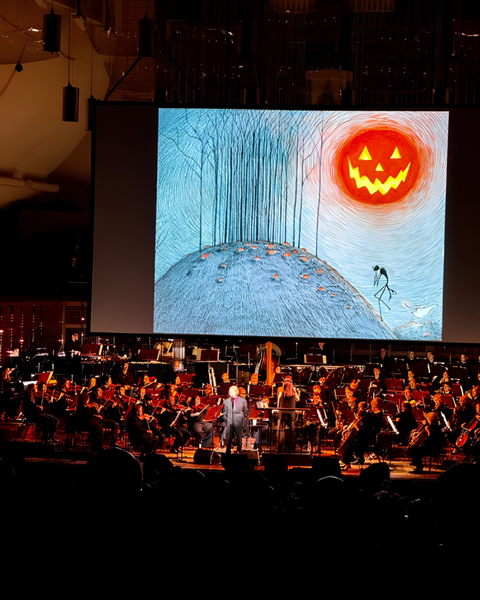
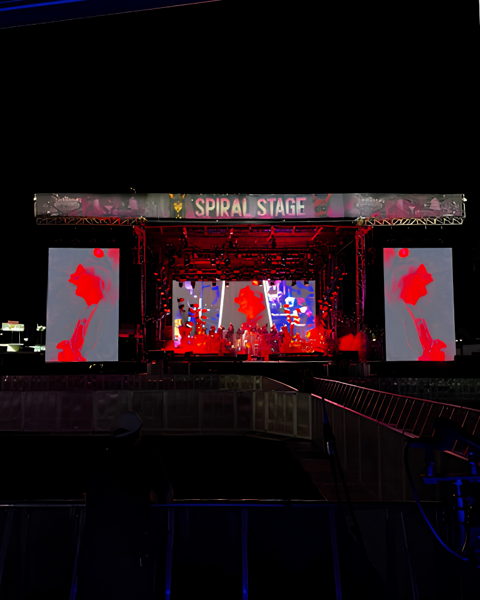
From extravagant symphony halls to energetic festival grounds, Elfman and his orchestra members can perform with the confidence that each note will be heard distinctly thanks to the MCM 114.
“In the final song of the set, every single input on stage is open,” John concluded. “Because of the tight polar pattern and the clarity that we’re getting, the string sound tends to blow the audience away. They often don’t believe it’s real — they think it must be a backing track because they can’t imagine getting that much detail over a band playing that loud. It’s a testament to the artistry Danny wants to show — real music and real musicianship, delivered with absolute fidelity.”