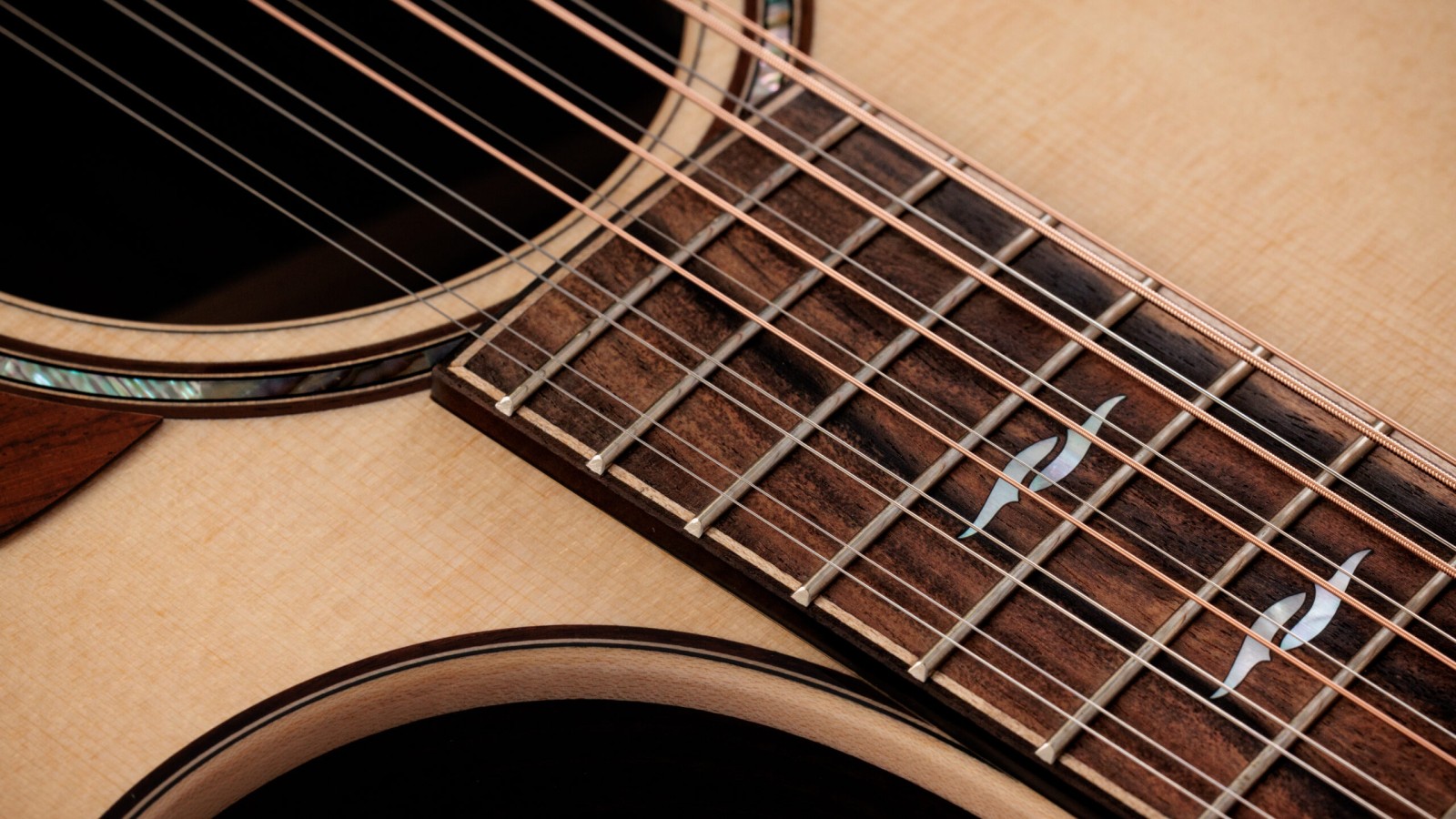
In a market that’s always looking for the next shimmer, the 12-string guitar is enjoying a very timely renaissance. Once pigeonholed as a folk-rock jangle machine thanks to players like Roger McGuinn and bands like The Byrds, today’s 12-strings are ringing out in fresh contexts — most notably across Latin music, where regional Mexican, Latin pop, and tropical styles are driving a noticeable surge in demand. From stage-ready acoustics to plug-and-play hybrids, retailers are seeing players gravitate toward that unmistakable chorus-like bloom only a doubled course can deliver. For MI dealers, the question isn’t whether the 12-string is back — it’s how to merchandise, stock, and tell the story in a way that turns all that sparkle into sustained sales.
How is demand for 12-string guitars evolving in today’s market? Are you seeing growth, stability, or increased niche positioning—and in which segments (acoustic, electric, entry-level, premium)?
Frank Facciolo: We have always had a strong presence in the 12-string market. It’s something that we have put emphasis on over the last several years and we have seen growth as a result of it. We tend to see the most potential in electric acoustic $300-500 or in pure acoustic at the $200 price point.
Fred Greene: We’ve seen relatively stable demand in the premium market: $2,500-$4,000. On our entry-level (sub $800) we have seen modest growth, specifically in a cutaway model. Artists really love the 12-string and we have seen an up-tick in the requests from artists to use them.
Tom Watters: For decades, Takamine has been a leader in acoustic-electric 12-string guitars. If you ever heard the intro to Eagles’ iconic “Hotel California,” that’s a Takamine 12-string. Takamine is currently seeing growth in the 12-string market, and it spans several price ranges and musical applications.
Monte Montefusco: Bob Taylor’s original 855 was key to Taylor’s early success. Neil Young discovered one in 1978 and featured it in his Rust Never Sleeps live concert film. Forty-seven years later, we experienced a record year for our 12-string sales, reflecting a growing desire among players to bring a distinct tonal character to their music. A 12-string can completely transform the feel of a composition, and we’re seeing increased interest across every price point as hobbyist and professional musicians look for new ways to stand out.
Andy Winston: Customers today are much more aware of features and benefits before visiting a music store. Although 12-string guitars account for only about 1-2% of acoustic guitar sales, selling as many guitars as Yamaha does annually reveals that a significant number of 12-string guitars are also being sold.
What are your current top-selling 12-string model(s), and what do you think is driving their success? Is it price point, legacy appeal, artist association, feature set, or a particular retail channel?
FG: Last year, we launched a Grand Jumbo double-neck (6- and 12-string,) and if that counts, it’s easily our current best seller. It’s a true utility instrument that may look unwieldy, but it’s quite ergonomic.
Since the revamp of our X-series line, the DX-2e-12 has been very popular. Solid spruce top and striking Brazilian Rosewood HPL back and sides make a tonally compelling and durable guitar.
Over time, our HD12-28 has been a consistent seller, as it draws on the legacy of our flagship D-28 with some slight modifications to make an excellent 12-string instrument.
TW: Our current top-selling 12-string models include the G Series GD30CE-12 and GD37CE-12, and the Legacy Series EF381SC. The popularity of these guitars are driven by multiple factors: price point, brand reputation, and the association with iconic artists.
MM: From a volume perspective, our popular 150ce 12-string delivers the highest sales velocity. This aligns with players who want a quality 12-string at a more affordable price point. A 12-string is typically the third or fourth instrument in a collection, and value is a key factor in the decision-making process. Higher-end players have continued to add our 600 and 800-series 12-strings to their collections. Taylor’s reputation for quality and playability provides the foundation for our 12-string success across all price points.
AW: Yamaha currently has three very different 12-string acoustic guitars available for customers to choose from. Our most popular would be the FG820-12, which matches a solid Sitka spruce top with scalloped top bracing. Our APX700II-12 features our A.R.T. (Acoustic Reference Technology) pickup and preamp system, a cutaway, and a thin-line APX body for comfort and accessibility. The Yamaha LL16-12ARE pairs a solid Engelmann spruce top and solid rosewood back and sides with our passive S.R.T. undersaddle pickup for a full, rich plugged-in tone.
FF: The 12-strings in our AEG line have always been our strongest skus. They are electric acoustic instruments that offer a nice feature set for the price point that they are in. I think their success is driven by the combination of the price point along with the build quality and feature set.
Who is today’s 12-string customer? Are you primarily reaching traditional players seeking classic tones, or are newer demographics — such as worship musicians, indie artists, or content creators — entering the category?
TW: In addition to areas where Takamine 12-strings were already dominant… country, worship music, and pop singer-songwriters… our guitars have emerged as the market leader for players in the multiple genres of Regional Mexican music. Many of the respected players in this style are young Gen-Z musicians who’ve grown up on Takamine as being the guitar of choice for iconic performers in that style. One look at this year’s Latin Grammy awards could show anyone how important Takamine is to that vibrant music style.
MM: The musical landscape is constantly shifting, with listeners now enjoying access to more genres than ever before. As new creators look for ways to stand out, many turn to distinctive sonic textures like the layered complexity of a 12-string guitar. For solo players at home, the lush, full-bodied voice of a 12-string can complement and elevate a less-than-perfect singing voice. Coupled with recent tours from iconic ’70s artists, these factors have helped bring the 12-string back to the forefront of today’s musical vocabulary.
AW: The Yamaha breadth of product range allows us to introduce a 12-string into a player’s hands at any stage of their journey. Additionally, the influencer and creator markets are expanding, with many individuals producing 12-string content at home or in their personal studios.
FF: A lot of the growth we are seeing in this market is being driven by the Latin American market.
FG: Folk and traditional players have long gravitated toward our premium 12-string guitars, but we have seen some emerging markets in world music, as well as Latin American music.
What design or engineering strategies are you using to address long-standing 12-string challenges like neck stability, string tension, tuning stability, and playability?
Have advances in materials, bracing, neck construction, or electronics shifted your approach?
MM: From the beginning, our guitars have featured neck profiles intentionally crafted for comfort, appealing to electric players transitioning to acoustic guitar. Over time, we’ve continuously refined these designs. Our V-Class bracing enhances intonation and tuning stability, while ongoing neck engineering improvements make playability adjustments even easier. Advancements in our pickup design also ensure effortless amplification. Because every player’s needs are unique, offering a range of body shapes in our 12-string lineup helps musicians find the instrument that feels and sounds right for them. Our Grand Concert 12-string guitars have been particularly popular as the “downsizing” trend continues.
AW: What sets Yamaha apart from competitors is our expertise in wood and the processes of drying and curing neck woods, which help minimize common neck problems seen in other guitars. The LL16-12ARE features the same durable 5-ply mahogany and rosewood neck as all L Series models.
FG: Our most recent double-neck Grand J put many of these strategies to the test. Due to the increased tension (just over 400 lbs) of this instrument, we had to balance bracing for tone, strength, and long-term stability. In addition to our guitar design, we design and manufacture strings that are optimized for tone and playability of our 12-string models.
FF: The added tension on a 12-string does create challenges that are less of a concern for a regular 6-string. We are always looking at new techniques to create a more stable instrument. This may be a neck that is 3- or 5-ply for added stability. Maple is s harder wood that we will use in necks for stability as well. Additionally we have also experimented with a ticker top board. It’s a fine line though because we don’t want to sacrifice tone or playability so we have to find the right balance.
TW: One of Takamine’s more recent models is the GD74CE-12U, where the “U” is for “unison.” Instead of using the traditional octave courses on the lower four string pairs, it’s designed to handle the extra string tension of unison courses (using two six-string sets). This guitar was specifically designed for the needs of the Regional Mexican market.
How significant are heritage models, reissues, and artist associations in driving 12-string interest and sell-through?Does nostalgia still anchor the category, or is innovation playing a larger role?
AW: Artist interactions still help drive instrument sales and lend an air of credibility to any instrument. What’s interesting is that Yamaha never does a ‘reissue’ or ‘heritage’ model from our past guitars. We choose to always remain forward-looking and to create new instruments using the knowledge gathered from EVERY instrument family we manufacture.
FF: For our brand this plays little to no role in the success we have seen.
TW: Extremely significant. Takamine’s Legacy Series and Signature Series address those specific markets. After 63 years in business, Takamine has a stellar reputation as the working musician’s guitar of choice. At the same time, no guitar company can simply rest on their laurels. Takamine is constantly innovating with our build techniques and our preamp/electronics designs, since so many of our players are live performers who need reliable, great-sounding, and hassle-free ways to get on stage with their 12-string guitars.
FG: Historic models and artists using these instruments undoubtedly drive interest, and we capture that market. On the innovation front, we’ve recently launched a Johnny Marr signature M-7. This captures some of the jangle and shimmer of a 12-string in 7 strings, by adding an octave to the G.
MM: Many of us first picked up a guitar because we were inspired by the look, sound, or onstage presence of the artists we admired. There’s no question that legendary performers have shaped interest in the 12‑string category, as many iconic songs simply can’t be authentically captured on a 6‑string. A standout in our Legacy collection, the 855e, represents an evolution of our earliest 12‑string designs and carries that 1970s heritage forward. Beyond our historic models, modern artists lend validation and credibility to the instruments they choose to perform and record with. Still, when a customer reaches the register, playability, comfort, and overall value ultimately drive their purchase decision.
From a dealer perspective, what helps 12-strings perform on the sales floor? Are there key price tiers, demo strategies, setup considerations, or merchandising approaches that improve turnover?
TW: The answer is more simple than you’d think. Keep 12-strings available and handy for customers to try out. And make sure they’re in tune! It seems like a small thing, but musicians trying out a 12-string don’t need any deterrents. Fortunately, all Takamine 12-string models have an onboard tuner, making that process quick and easy.
FG: We take the consumer’s first impression with a Martin 12-string the same as with all of our instruments, and to that end, we strive greatly in initial setup and final QC. Playability, with 12-strings specifically, plays a large part in consumer consideration and a quick buy/no buy scenario.
MM: Confidence is essential when guiding a customer toward the right instrument. Staff should be able to speak knowledgeably about your selection and demonstrate easily recognizable 12-string songs. To help minimize buyer’s remorse, we suggest a four-tier assortment strategy: good, better, best, and boutique. Ensure your entry-level option is genuinely playable and inviting. Discouraging a new 12‑string player with poor quality can mean losing a long-term customer. At the other end of the spectrum, experienced and more affluent players expect premium instruments that reflect their aspirations. Today’s 12‑string buyer is typically a seasoned musician and multi‑instrument owner, so thoughtful curation at every tier helps support a strong, lasting relationship with your store.
AW: On the sales floor, dealers will see increased 12-string sales if the guitars are tuned, polished and accessible. An out-of-tune guitar (and especially 12-string guitars) will be difficult to listen to, and even more difficult to sell. We at Yamaha take pride in the fact that our dealers stay on top of these issues to offer customers the best shopping experience available.
FF: The demand is clearly there. Offering a good better best tiered approach with instruments that provide real value for the price points they are in will no doubt bring success.