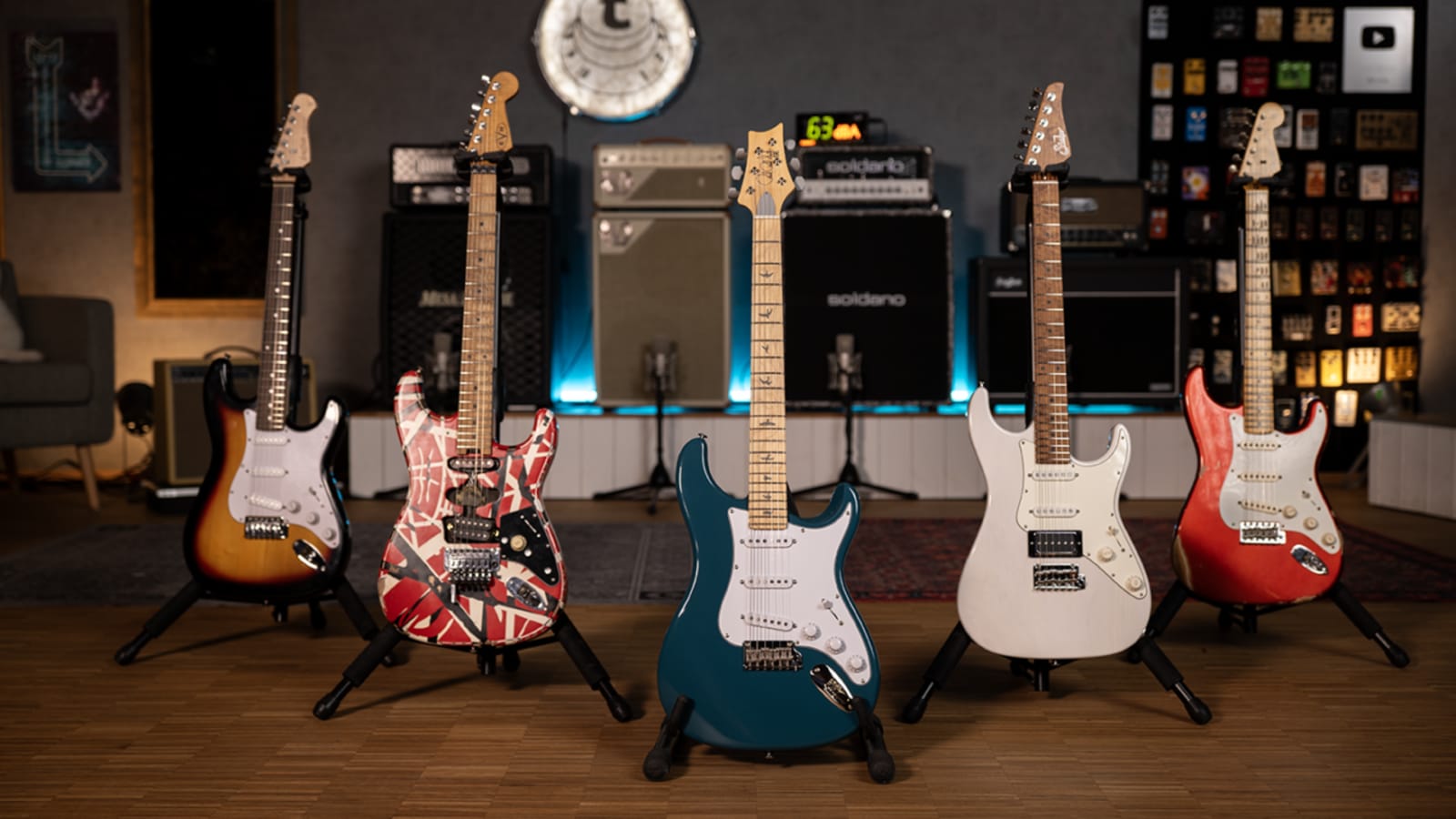
Fender Musical Instruments Corp. sparked widespread controversy in May of this year by launching an aggressive legal campaign, sending cease-and-disist letters to multiple rival guitar suppliers to enforce copyright protection over the iconic Stratocaster body shape. This sudden legal blitz has disrupted the guitar industry because the “S-style” double-cutaway shape has been widely treated as public domain and replicated by countless brands for over 70 years.
On June 22, Thoman issued the following statement on their website:
“For brand diversity and innovation: Why we are taking legal action against Fender’s cease and desist demand.
The Stratocaster is one of the most famous guitars in music history. Over decades, it has inspired countless luthiers and guitar manufacturers to develop their own ideas, think ahead and create new instruments.
This is exactly why we are following the current developments around the cease and desist demands issued by Fender against numerous manufacturers, distributors and dealers in Europe and the USA with great concern.
Fender recently obtained a so-called default judgment at the Düsseldorf Regional Court against a Chinese company trading in S-style guitars. This judgment is based on missed deadlines, i.e. pure formalities, and does not, in our opinion, represent a comprehensive review of the legal claims. On this basis, Fender is now attempting to enforce a fundamental copyright claim to the body shape of the Stratocaster and is simultaneously taking action against European dealers and manufacturers. American manufacturers who sell their instruments in Europe, however, are also affected.
After careful consideration, we have decided to take legal action. We have done so because we are convinced that the questions raised here go far beyond a mere legal dispute and affect the future of diversity, innovation and competition in our industry.
A shared history since 1954
1954 was a special year for the guitar world: Fender launched the Stratocaster.
1954 was also the year in which Musikhaus Thomann was founded. Shortly after the foundation in 1954, musicians were able to buy instruments with the Fender logo from us. For more than 70 years, we have been carrying Fender instruments with conviction and great appreciation. Many of us play Fender guitars ourselves. It is understandable that Fender’s current action against long-standing business partners has surprised and disappointed us.
Form follows function
The Stratocaster’s success is not only down to how good it looks.
The upper horn ensures perfect balance, the cutaways make it easier to play in the upper registers, and the contours of the body increase playing comfort. The shape of the Stratocaster was created to provide musicians with the most functional and ergonomic tool possible.
This is exactly why it has been taken up, developed further and reinterpreted by luthiers all over the world over decades. Many innovations in the modern guitar world are based on this development. From small workshops to established manufacturers, generations of instrument makers have helped to continuously develop the concept of the S-style guitar.
In the motherland of the Stratocaster, its form has long been considered to be in the public domain. The free use of the Stratocaster as a model for one’s own creations has been and remains the basis for countless further developments from which the entire guitar world has benefited – including Fender itself.
One of the most famous examples is Eddie Van Halen’s legendary Frankenstrat. This instrument gave birth to the idea of the Superstrat, and a development began that has inspired generations of guitar players and makers. It is hard to imagine a world in which this growth was nipped in the bud.
Why we have taken action
Of course, the current escalation of the situation also affects us.
We want to be able to offer you the entire range of the guitar world in the future. As a retailer and a manufacturer, we are experiencing the effects of current developments from a number of perspectives. Our Harley Benton brand is affected, too.
We are, of course, interested in having Fender’s allegation of copyright infringement resolved in unbiased court proceedings. Likewise, Fender has the opportunity to present all their arguments to the court. The court may then initiate discovery, which has not happened so far.
But for us, this is not just about the impact on our own business.
Our CEO Hans Thomann makes this point:
“We used to be a small music store ourselves and know exactly where we have come from. Diversity, fairness and respectfully dealing with each other have always been part of our philosophy. Many of those affected do not have the financial and legal means to conduct such a legal dispute. We therefore see it as our responsibility to have this matter clarified in court not only for our own company, but for all parties involved.”
We have deliberately committed ourselves to the many great manufacturers, luthiers and dealers whose work is indispensable for the diversity of our market, regardless of whether or not we carry their instruments. Iconic custom shop manufacturers, traditional brands and innovative developers such as Tyler, Tom Anderson, Suhr, LSL, Maybach, Pensa, FGN or PRS and many others stand for the multifaceted guitar ecosystem that we appreciate so much. From our point of view, it is precisely this diversity that is at stake due to current developments.
Our appeal
The history of the Stratocaster has not been written by one company alone. It has been shaped by musicians, luthiers, developers and manufacturers around the world. Its importance for the music world also arises from the sheer number of people who built on it and developed new ideas from it.
We see this diversity as one of the great strengths of our industry.
That is why we will continue to pursue the legal path we have chosen. Not only for our own company, but also for the many manufacturers, dealers and guitar makers who have shaped our industry for decades and continue to shape it.
We urge Fender to stop issuing cease and desist demands against manufacturers, distributors and dealers and to return to a fair, cooperative partnership.
Because we are convinced of this: The future of the guitar world depends on diversity, innovation and the freedom to create.
Your Thomann Team”