Founded by Harold Rhodes in 1946, Rhodes became one of the most influential keyboard instruments of the 20th century, shaping the sound of jazz, rock, soul, and pop music. As the company marks its 80th anniversary, Rhodes looks back on a history spanning from the original Fullerton factory in California to its modern revival in Leeds, UK, where a new generation of builders and engineers continues the legacy of the iconic electromechanical piano.
|
%20Final-Inspection.png)
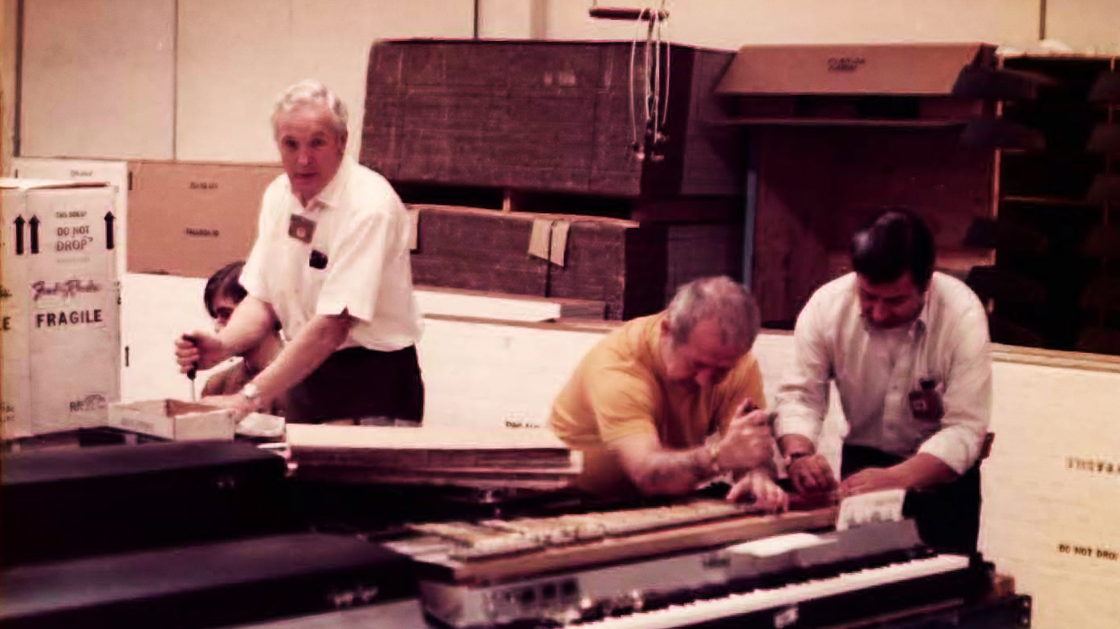
Few people witnessed the rise of the Rhodes piano as closely as Roger Garvin. Joining CBS Musical Instruments in 1970, Roger spent the next decade inside the Fullerton, California factory during one of the busiest and most influential periods in Rhodes history, first overseeing the Rhodes production line before later serving as Rhodes Marketing Director during the CBS/Fender era.
Long before the instrument became associated with jazz fusion, soul, and rock music, Roger recalled that Harold’s motivation came from his experience as a piano teacher. At the end of a lesson, one student would leave the room and pay for their session, while nearby guitar teachers would walk away having taught entire groups of students at once. “That bothered him,” Roger said.
|
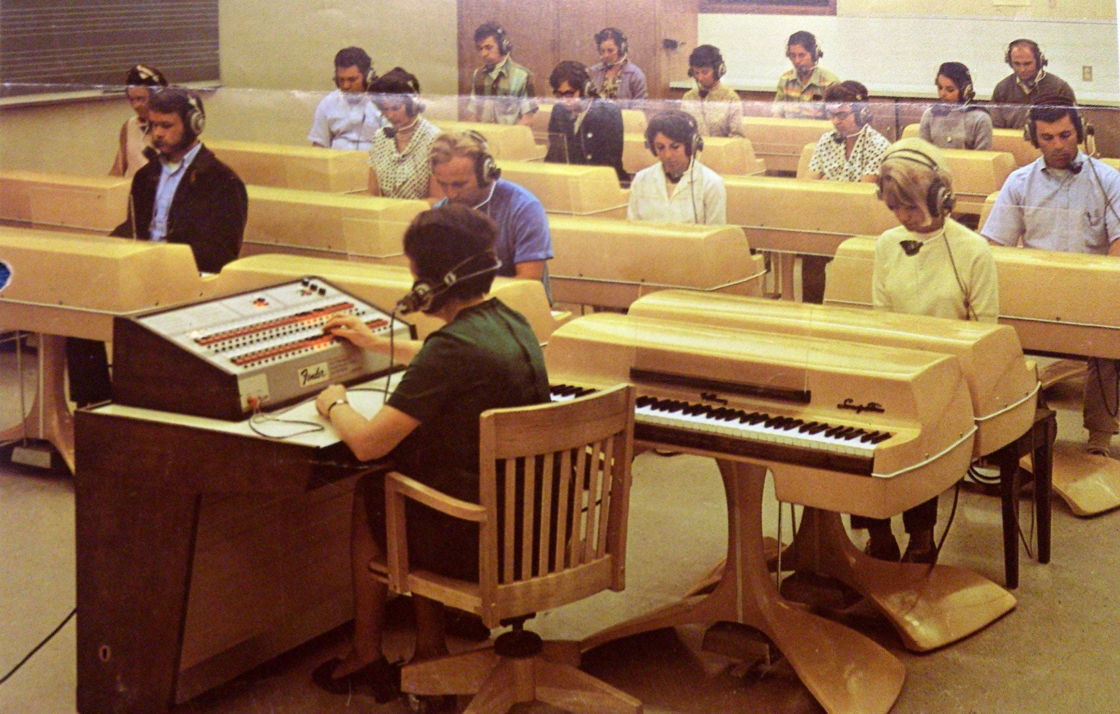
“Part of the genesis of the Rhodes piano was that Harold wanted to be able to teach multiple students at the same time,” Roger explained. “He wanted to give the teacher the ability to punch in, or punch out and listen to each student one at a time.”
The Fullerton Years
By the early 1970s, the Rhodes piano had evolved far beyond its educational origins. As the instrument found its way into studios, touring rigs, and concert stages around the world, Rhodes became closely associated with artists including Herbie Hancock, Stevie Wonder, Chick Corea, Joe Zawinul, and Ray Manzarek, helping define the sound of an era.
“It was an amazing time for the Rhodes piano as jazz and rock musicians discovered a sound that perfectly complemented the waveforms of string, woodwind and brass instruments,” Roger said. “The Rhodes piano paved the way for the explosion of electronic keyboard instruments that followed.”
|
%20Damper-Assembly.png)
As the Rhodes became a fixture on stages and recordings throughout the 1970s, Harold Rhodes maintained close relationships with many of the artists embracing the instrument. Roger remembered a steady stream of musicians, including Herbie Hancock, Ray Charles, Patrice Rushen, and Chuck Mangione, passing through the Fullerton factory and sharing their experiences with the piano. “Harold loved talking to them,” Roger said. “They all came by, and they were big fans of the instrument.”
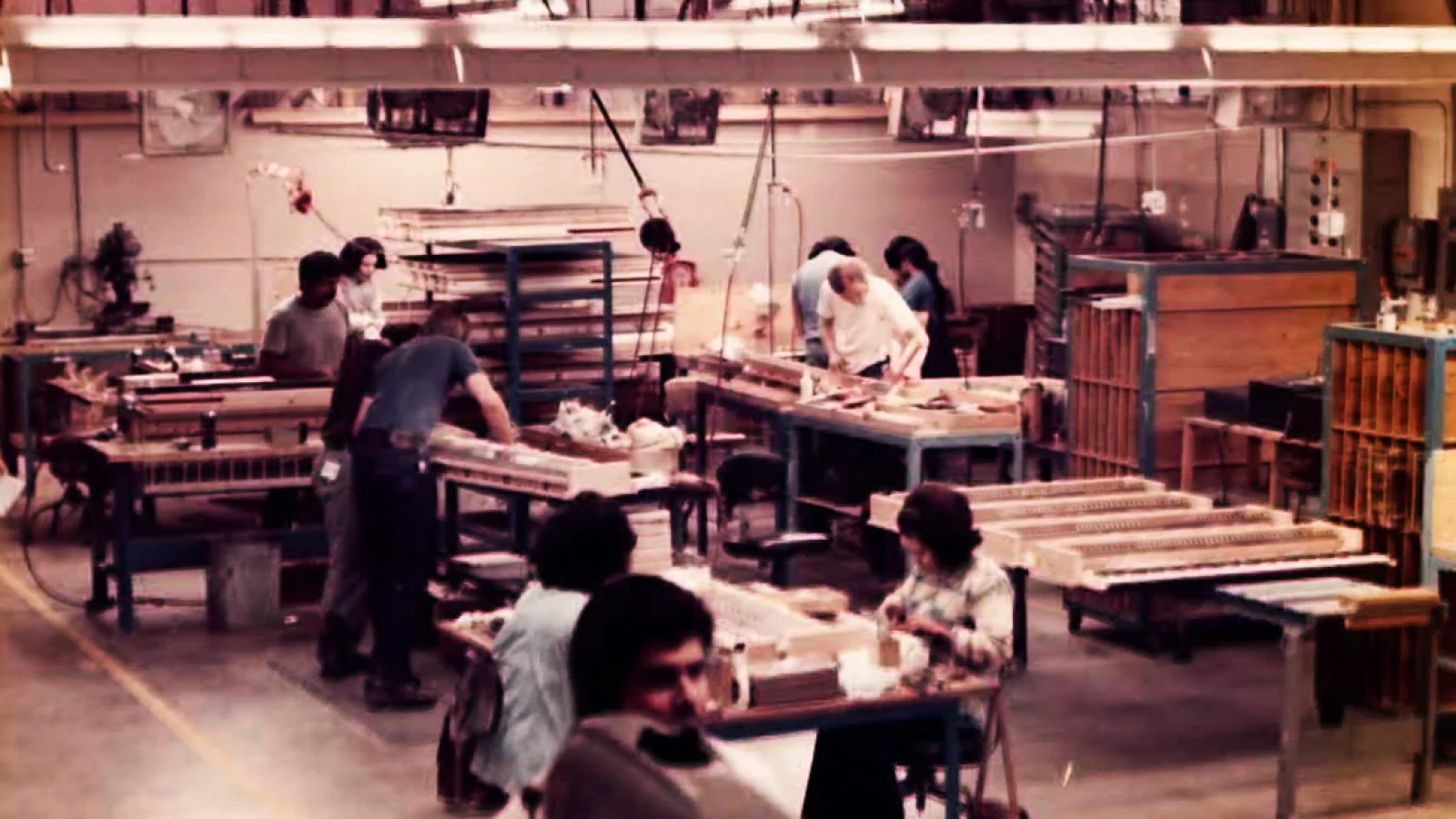
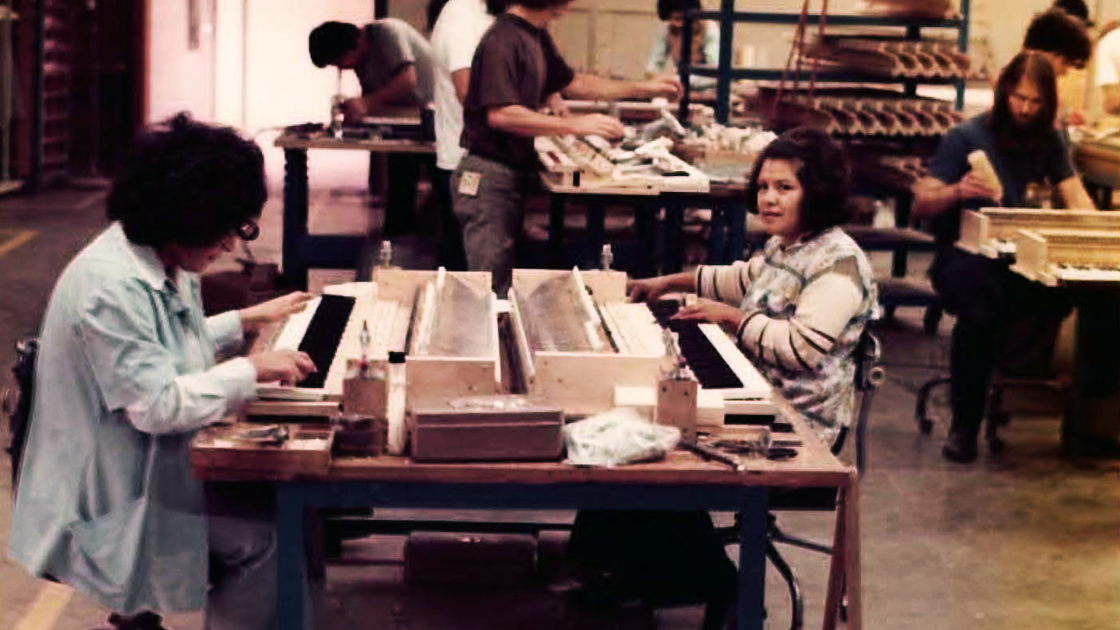
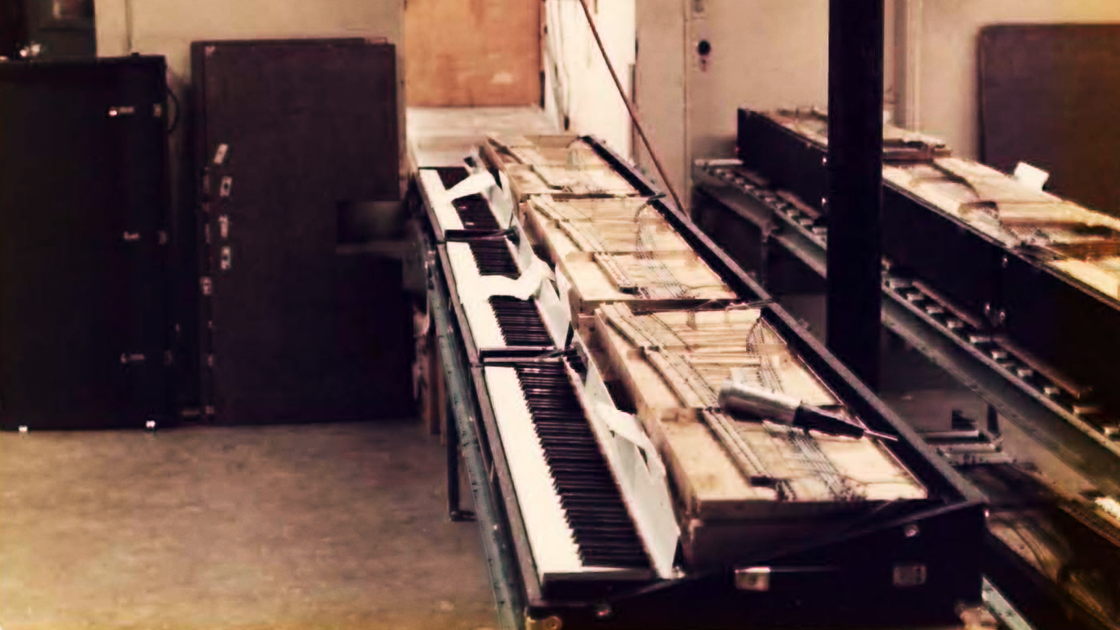
The Fullerton factory was a busy and constantly evolving environment during these years, with Rhodes produced alongside Fender guitars, amplifiers, Rogers drums, and other CBS Musical Instruments divisions as demand continued to grow throughout the 1970s. Roger remembered the Fullerton factory as a sensory environment of wood dust, machine oil, Tolex glue, electronics benches, metal stamping equipment, and rolling racks of partially assembled pianos moving between departments. Many of the people building the instruments came from musical backgrounds themselves, from guitar players and band directors to performers and music educators, creating what Roger described as “a real musical environment.”
The factory also operated with a remarkable level of in-house engineering and manufacturing capability, with tone bars, frames, brackets, hardware, steel parts, and many other components either produced directly inside the facility or carefully evaluated against outside suppliers. “We could do anything there,” Roger recalled.
|
%20Tone-Bar-Rack-Install.png)
The MK8 Era
Nearly half a century later, seeing the contemporary Rhodes flagship, the MK8, brought Roger immediately back to that period in Fullerton. He recognised the same character and musical spirit that defined the original Rhodes pianos decades earlier, now reimagined through modern craftsmanship and engineering for a new generation.
|
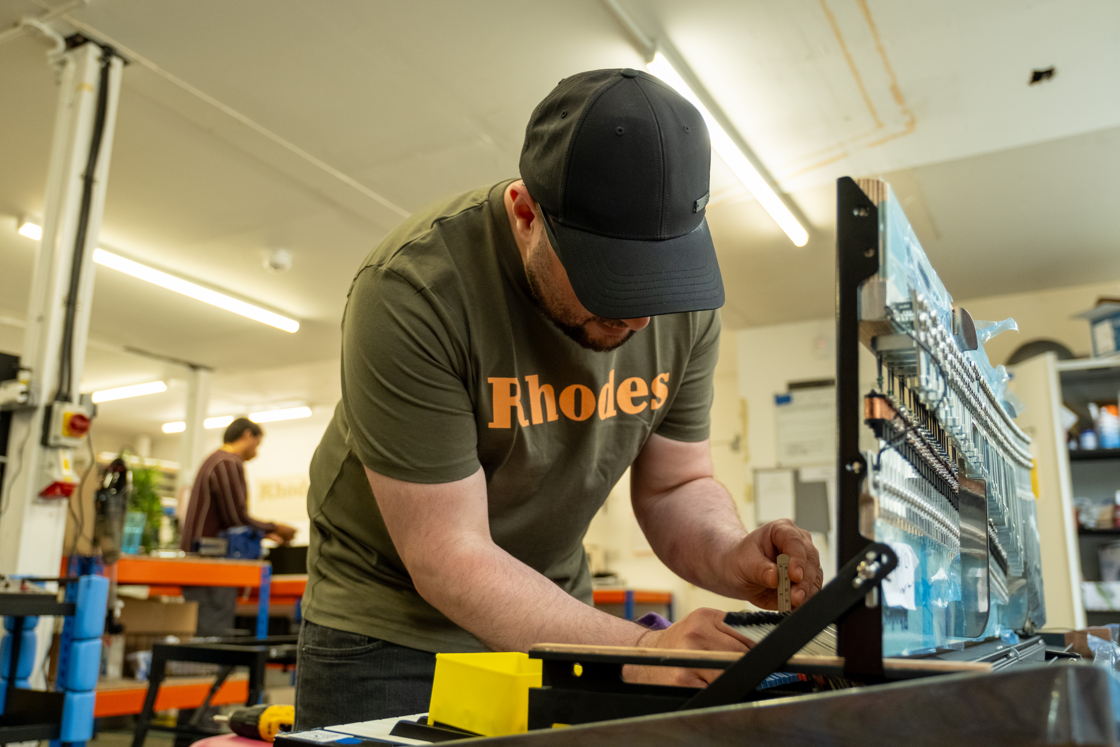
“When I first saw the MK8, I thought Harold would just be grinning from ear to ear,” Roger said. “He would be so delighted to see what it had become. At the same time, he’d be going, ‘Well, why the hell didn’t we think of that?’”
For Roger, the MK8 represented more than a modern interpretation of a classic instrument. Having spent a decade inside the original Fullerton operation, he saw many of the same ideas and values that shaped the Rhodes during its formative years reflected in the modern instrument.
Roger was also struck by how ideas that once required external equipment had found their way into the modern Rhodes. “When I was Rhodes product manager, we’d have dealer meetings,” Roger recalled. “One of the first things I did was I hooked up a wah pedal and an effects pedal on the suitcase piano, and I demonstrated to the salespeople all it could do. It’s amazing to see the instrument come full circle.”
|
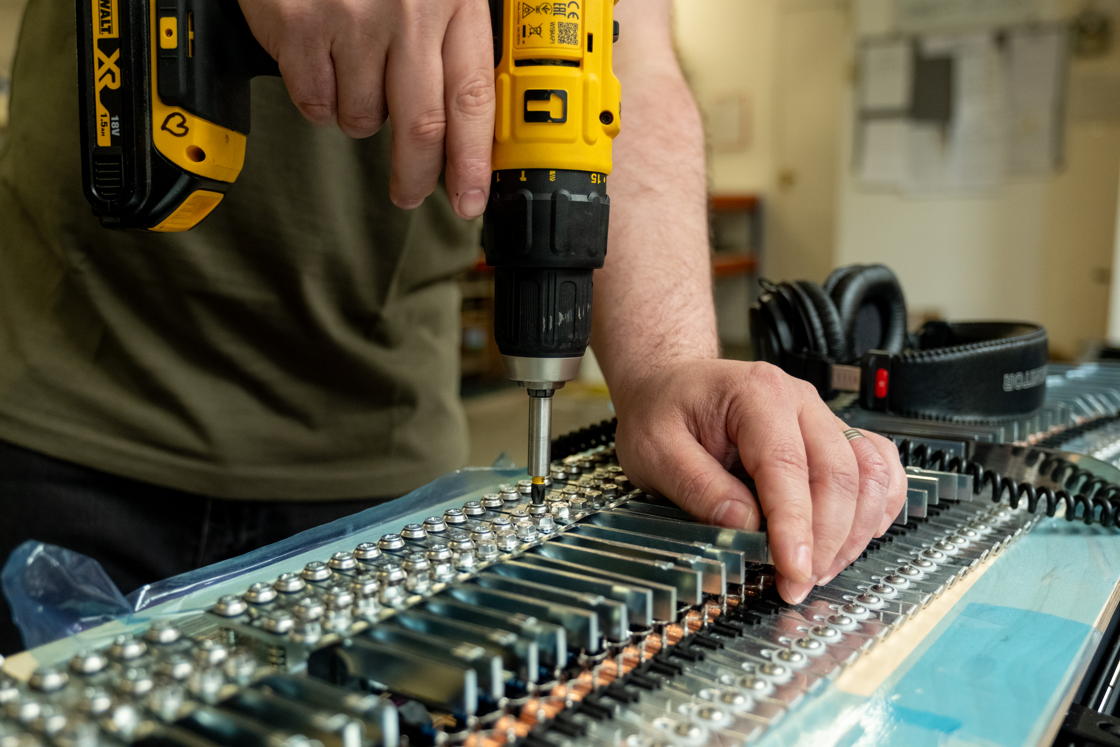
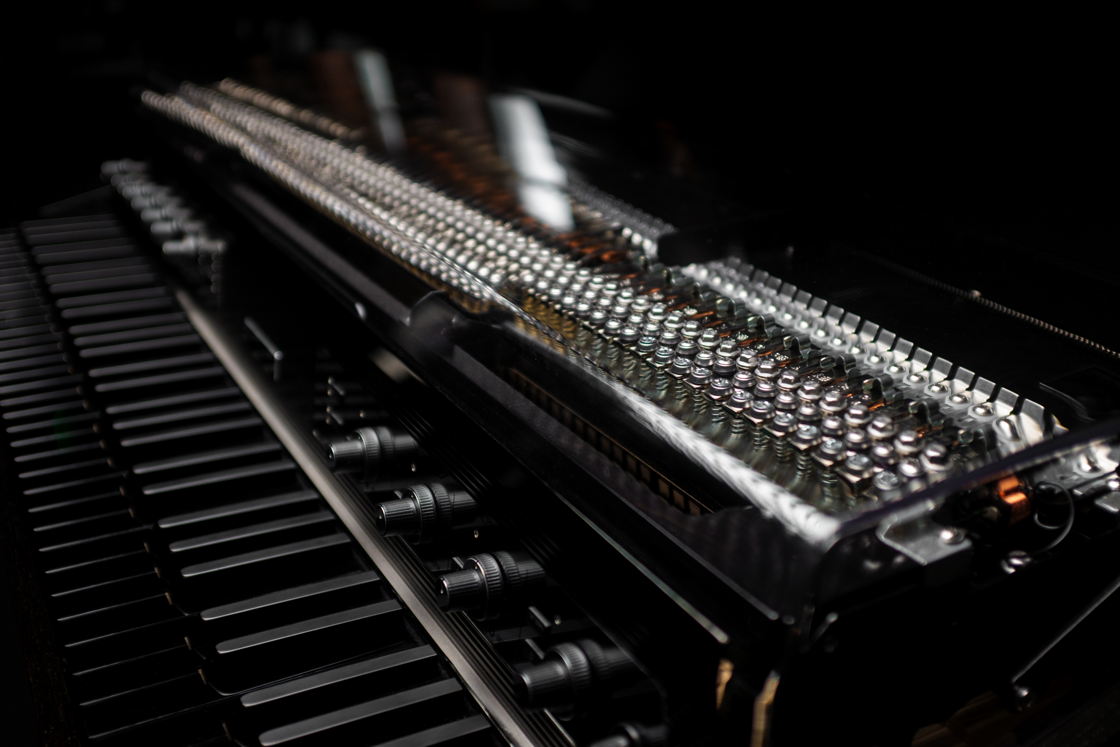
As Rhodes approaches its 80th anniversary, the company prepares to celebrate the milestone with the upcoming MK8/80AE, a limited-edition instrument set to be unveiled later this summer.
Reflecting on early images of the Rhodes MK8/80AE, Roger viewed it as a continuation of the legacy he had witnessed firsthand in Fullerton. “Rhodes has honored what Harold Rhodes and Leo Fender created in the best possible way,” Roger said. “I think it’s safe to say Harold would be absolutely thrilled with what Rhodes has done with the instrument.”
|
For more information, visit u14456542.ct.sendgrid.net.
Historical images courtesy of Roger Garvin.