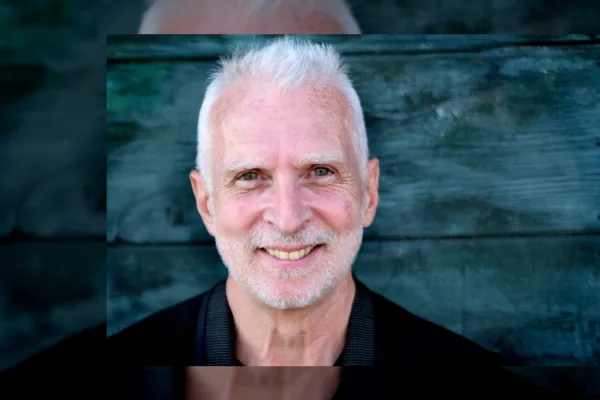
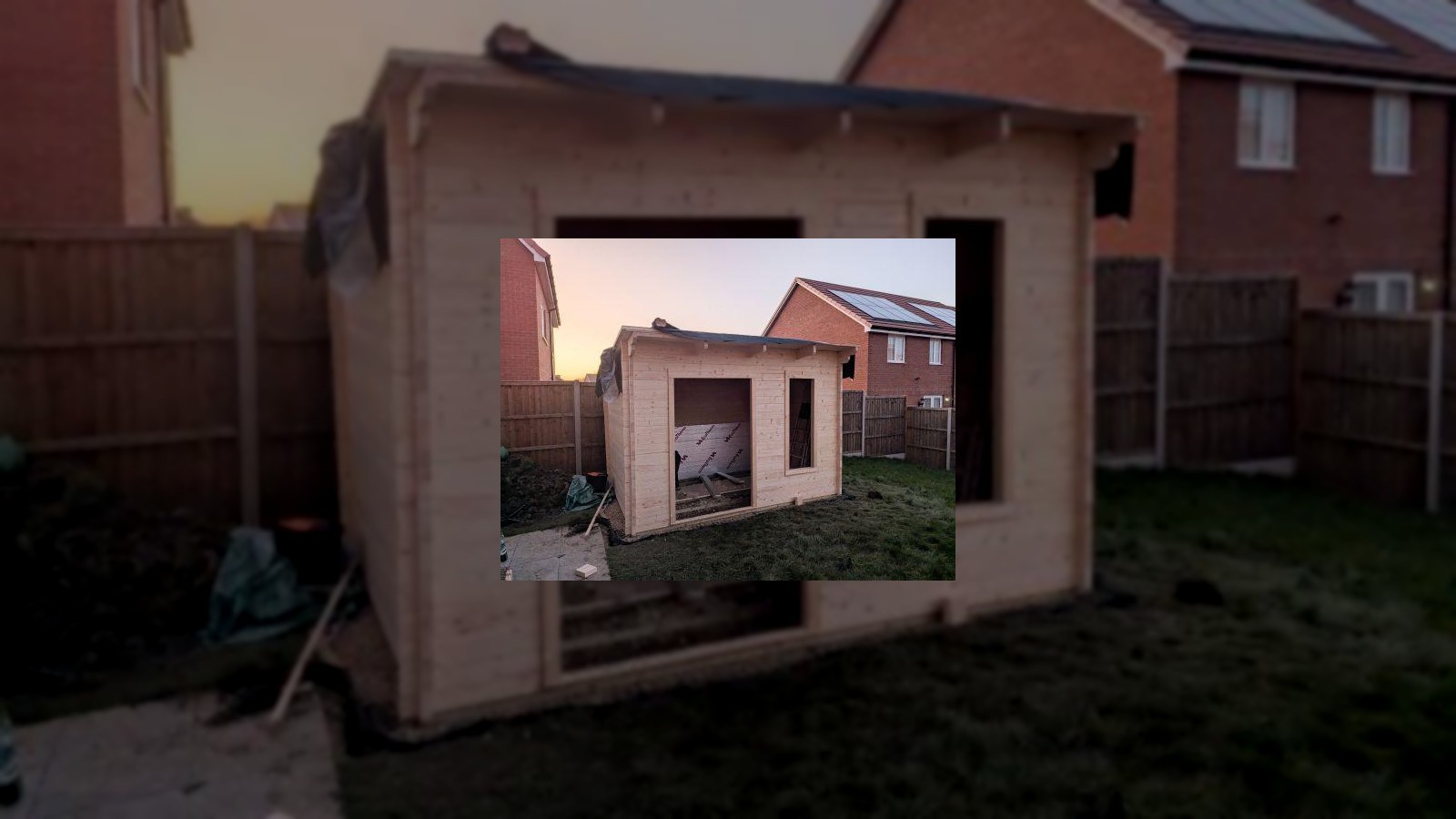
From mixing major acts at London facilities to being shortlisted for the Music Producers Guild’s Dolby Atmos Mixer of the Year award, Kurt Martinez has established himself in immersive audio. After serving as head Dolby Atmos mix engineer at Dean Street Studios, where his credits included Central Cee, Kylie Minogue, Perrie and Soft Play, Martinez built a professional Dolby Atmos mixing room in his garden with an Audient ORIA at its center.
Martinez said the MPG nomination provided meaningful industry recognition for his work in the format. “I was in complete shock when I saw the email land in my inbox to tell me I’d made the shortlist,” he said. “I’ve been a fan of Andrew Scheps’ work for a long time; finding myself considered alongside someone of Andrew’s calibre was completely surreal.”
The transition to a home environment reflected both lifestyle changes and a desire for independence. Long, unpredictable hours and a two-hour commute into London became difficult after the birth of his daughter. Martinez settled on a compact 2.5-meter-by-3.5-meter footprint and completed most of the construction himself, outsourcing only the electrical and internet work.
Because the studio is in the countryside, internal acoustic treatment was a greater priority than heavy isolation. Martinez used porous timber walls to absorb low frequencies, acoustic panels on the sidewalls and ceiling, slat paneling on the front wall and a large rear bookshelf for dispersion. Laminate flooring with acoustic underlay reduces vibration, while armchairs and a rug provide additional absorption.
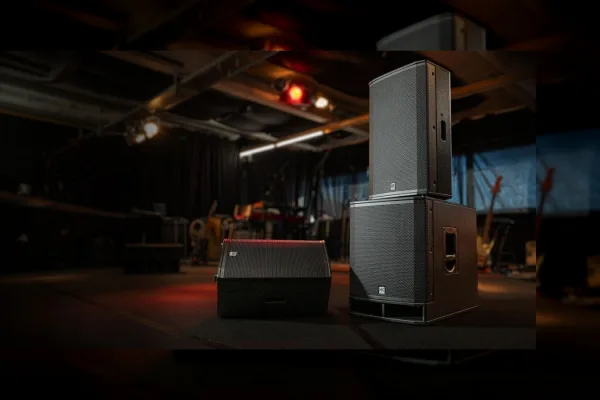
The monitoring system includes PMC6-2 left and right monitors, a PMC6 center speaker, an 8 Sub low-frequency effects speaker and Ci30 height and surround speakers. Audient’s ORIA handles room correction and routing to the speaker array and headphones. Martinez works in Pro Tools with the external Dolby Atmos Renderer and feeds audio to Ginger Audio’s Ground Control Sphere, controlled from an Elgato Stream Deck+.
The setup lets him switch among physical outputs, binaural rerenders, Apple Spatial Audio rerenders and stereo references. ORIA also stores separate speaker profiles, including a flat profile using the speakers’ native processing, a calibrated Sonarworks profile, a Dolby curve and a stereo profile.
Martinez said ORIA’s direct speaker outputs and AES connectivity simplified a process that had previously depended on a networked system. Balanced quarter-inch connections feed the main monitors, while separate connections feed the amplifier for the height and surround speakers.
An Audient iD48 manages the studio’s analog outboard equipment through a DB25 connection to the main patch bay. In stereo sessions, Martinez uses the hardware as inserts. For Atmos work, he applies the same inserts to the left and right channels as a stereo bus and uses plug-in versions when processing objects elsewhere in the room.
The completed room has allowed Martinez to return to speaker-focused mixing after relying on headphones and rented commercial rooms. He checks mixes on Apple AirPods Max and a Sonos home theater system. He said his five most recent full-length records required no adjustments after checks in larger commercial facilities.
“Don’t rush it,” Martinez advised engineers considering their own immersive rooms. “Work out your budget, work out your time frame and map out exactly what you need, not necessarily what you want.”
For more information, visit audient.com.