There are certain dates that seem permanently etched into the minds of people who have spent enough years in a particular industry. No matter how much the landscape changes, no matter how many events come and go, those dates retain a kind of gravitational pull. You find yourself thinking about them even after the reason for doing so has disappeared.
For me, late spring and early summer still trigger one such reflex.
Around this time of year, I invariably catch myself thinking about Nashville.
Not because I have a trip planned. Not because I’m checking flight schedules or confirming hotel reservations. And certainly not because I’m preparing for Summer NAMM, which has now been absent from the industry calendar longer than many of us would care to admit.
Yet the instinct remains.
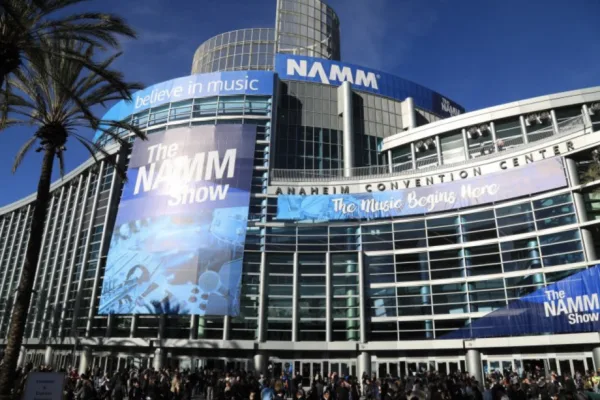
For decades, Summer NAMM occupied a unique place in the MI industry’s annual rhythm. It was never the sprawling spectacle that the January NAMM Show became. It wasn’t intended to be. Instead, it offered something different: a more relaxed gathering, a chance to reconnect with colleagues, conduct business, see products, attend meetings, and perhaps have a few conversations that might have been impossible amid the sheer scale and frenetic pace of Anaheim.
Like many industry events, Summer NAMM evolved over the years. It changed locations, formats, and emphasis. Some years felt stronger than others. Some exhibitors embraced it enthusiastically while others questioned its value. Such debates are hardly unique to our industry. Trade shows have always been subject to periodic scrutiny, particularly as communication technologies improve and manufacturers gain more ways to connect directly with dealers and end users.
Still, for those of us who attended regularly, Summer NAMM became more than a business event. It became a marker of time.
The music products industry has always been, at its core, a relationship business. Yes, products matter. Sales matter. Technology matters. But relationships remain the connective tissue that holds everything together. Trade shows provided a venue where those relationships could be renewed and strengthened. In many cases, they were where careers began, partnerships formed, and lifelong friendships took root.
Perhaps that is why the disappearance of certain events can feel surprisingly personal.
Of course, Summer NAMM is hardly the only example.
For many years, Musikmesse Frankfurt stood as one of the global MI industry’s premier gatherings. To walk its halls during its heyday was to experience the truly international nature of the music products business. Manufacturers, distributors, retailers, media, artists, and educators from around the world converged in a way that felt both enormous and remarkably intimate.
Then came the disruption that affected every corner of our lives and businesses.
Musikmesse did not take place in 2020 or 2021 due to the COVID-19 pandemic. In 2022, organizers announced its permanent cancellation, bringing an end to a trade show whose history stretched back decades and whose influence had been felt across generations of MI professionals.
Questions that had once seemed hypothetical suddenly became urgent: Do trade shows still matter? How many are necessary? What role should they play in a digital-first world?
Those conversations continue today.
The reality, as is often the case, has proven more nuanced than either side of the debate predicted.
Trade shows have neither disappeared nor returned unchanged. Instead, they are evolving. Organizers are experimenting with new formats. Exhibitors are becoming more strategic. Attendees are looking for experiences and opportunities that cannot be replicated through a video call or a livestream.
In some respects, that may ultimately strengthen the events that endure.
The value proposition has become clearer. If people are going to invest the time and expense required to travel, the experience must offer something meaningful: genuine connection, hands-on interaction, education, discovery, and the kind of spontaneous conversations that remain one of the great advantages of gathering in person.
Perhaps that is why I still find myself thinking about Summer NAMM.
What I miss most is not necessarily the event itself, but the rhythm it represented. The anticipation. The preparations. The familiar faces. The sense that, for a few days, a significant portion of the industry would find itself in the same place at the same time.
There was comfort in that continuity.
Yet industries, like people, do not stand still.
While some familiar landmarks have disappeared, new ones continue to emerge. Case in point: NAMM NeXT Europe, scheduled for June 10-11 in Amsterdam. The event reflects both continuity and change — an effort to create new opportunities for connection, education, and business development while acknowledging the realities of today’s marketplace.
As summer approaches, there will undoubtedly be moments when my mind drifts once again toward Nashville, even though there is no Summer NAMM awaiting me there. Old habits have a way of persisting.
And perhaps that is not such a bad thing.
Those reflexes remind us that our industry possesses a rich history, one built not only on instruments and technology, but also on communities and connections. Trade shows may change. Some may disappear altogether. New ones will emerge. The calendar will continue to evolve.
And, hey — at least I’ve got plenty of beach-days, outdoor concerts, and BBQs to look forward to this summer, even if no Nashville jaunt is in the cards. Hopefully the same is true for you!