
The MMR story: 147 years of music industry leadership
Explore MMR history
Covering the business of music since 1879
The roots of MMR reach back to the early American music trade press.
Musical Merchandise Review traces its publishing lineage to 1879. Its predecessor publications documented the business of making, selling and distributing musical instruments decades before the Musical Merchandise Review name was adopted in 1958.
Through enormous changes in manufacturing, retail, technology, education and music itself, MMR has remained focused on the people and companies that make the music products industry possible.
Today, MMR reaches more than 14,000 music industry professionals and continues the mission that began in 1879: covering the products, people, companies and ideas shaping the musical instrument and music products business.
MMR has been there through nearly every major transformation of the modern music industry.
And it is still here.
Nearly a century and a half of music industry history. Still covering what comes next.
Explore the covers and the people behind them.
The beginning: 1879
MMR traces its oldest publishing lineage to Music Trade Journal, founded by Charles Avery Welles in New York and documented in 1879. The American Musical Instrument Society’s historical bibliography traces the successive titles from Music Trade Journal to Musical Critic and Trade Review and then Music Trade Review.
America was in the middle of a period of extraordinary industrial growth. Piano manufacturers, brass and woodwind makers, publishers, distributors and independent music merchants were helping build a national music products industry.
MMR’s predecessor publications were there to document it.
A surviving Feb. 20, 1881, issue of The Musical Critic and Trade Review identifies The Music Trade Journal as incorporated into the publication and carries a copyright notice naming Charles Avery Welles and the year 1880.
The Music Trade Review in MMR’s lineage is the New York publication descended from Welles’ Music Trade Journal. A September 1885 issue names Welles as editor and proprietor under the Music Trade Review masthead.
Edward Lyman Bill later led the Welles publication. An 1891 masthead identifies Bill as editor and proprietor. Following his death in 1916, issues were published by his estate. These surviving mastheads document the people behind the publication as well as the changes in its name.
In March 1956, Music Trade Review became Piano and Organ Review. HathiTrust’s catalog records this predecessor relationship and the later connection to Musical Merchandise Review.
The detailed library record identifies the preceding Music Trade Review as OCLC 1590288. Piano and Organ Review began with volume 115, number 3, in March 1956 and continued through volume 116 in 1957. The record identifies those issues as the publication’s 77th and 78th years.
This succession of publications is the basis of MMR’s heritage dating to 1879. The modern Musical Merchandise Review title came later, through a merger with a second publishing line founded by Glad Henderson.
Glad Henderson and the growth of the music trade
In 1925, trade publisher Glad Henderson launched Musical Merchandise, a monthly publication focused on the growing musical instrument business.
Henderson helped establish the practical business journalism that would define the modern music trade press: reporting on manufacturers and products while giving retailers information they could use to operate and grow their businesses.
Henderson’s role in the trade press extended beyond musical instruments. As president of Henderson Publications Inc., he also edited Radio Television Journal and The Talking Machine World, connecting his publishing career to the radio and recorded-sound businesses.
His life ended in tragedy in May 1942. The New York Times reported on May 17, 1942, that Henderson, 58, had died the previous evening after falling from his 23rd-floor office at 1270 Sixth Avenue in Radio City, New York. The report, headlined “Publisher Dies in Plunge,” noted that he had worked in publishing for 25 years.
Henderson’s death closed the founder’s chapter in Musical Merchandise’s history. The publication continued through World War II and into the postwar expansion of the American music market, eventually becoming one of the two publishing strands brought together as MMR.
In 1958, Musical Merchandise and The Piano and Organ Review were brought together under the Musical Merchandise Review name, connecting the modern publication with a historical lineage reaching back to 1879.
The library records identify the merger partners as Piano and Organ Review and Musical Merchandise Magazine. The combined publication retained the older line’s volume numbering: MMR’s 1958 issues are volume 117, following Piano and Organ Review’s volume 116 in 1957.
MMR therefore brings together two founding strands: Charles Avery Welles’ 19th-century music trade publication and Glad Henderson’s Musical Merchandise, launched in 1925. The MMR familiar to generations of music dealers and manufacturers had taken shape.
The music industry, in its own pages
Before the electric guitar became a retail staple, before digital recording and online music stores, MMR’s predecessors were documenting the business of music. These surviving covers put that heritage on the page: the manufacturers, merchants, instruments and ideas that shaped the market we serve today.
Two publishing strands come together here: the Welles and Bill trade-paper lineage and Glad Henderson’s Musical Merchandise. Their merger created Musical Merchandise Review in 1958. Each cover opens at a larger size; archive links let readers explore the source.
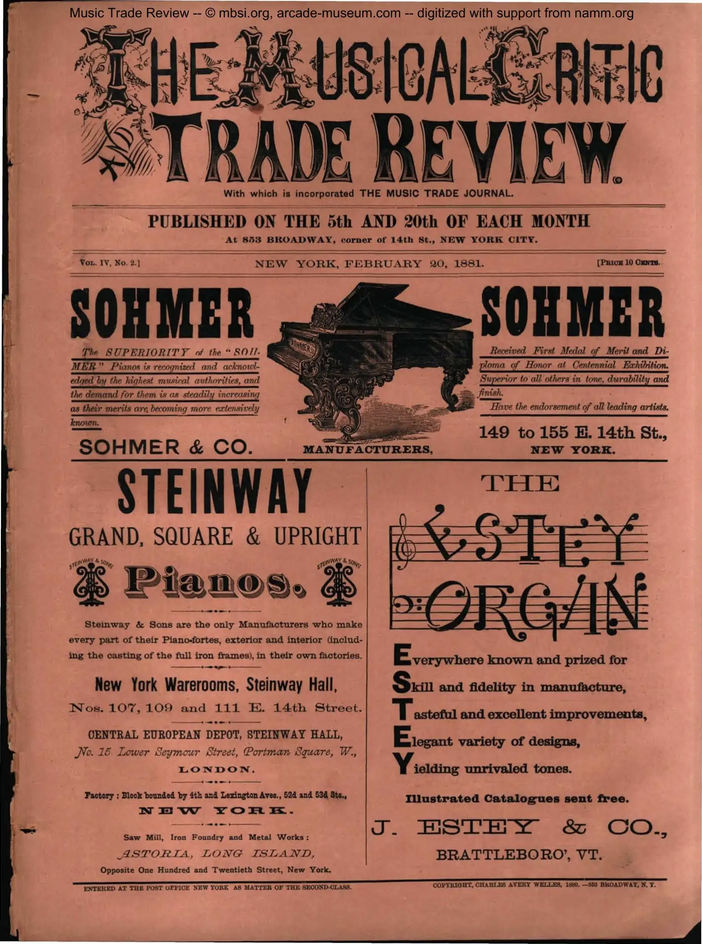
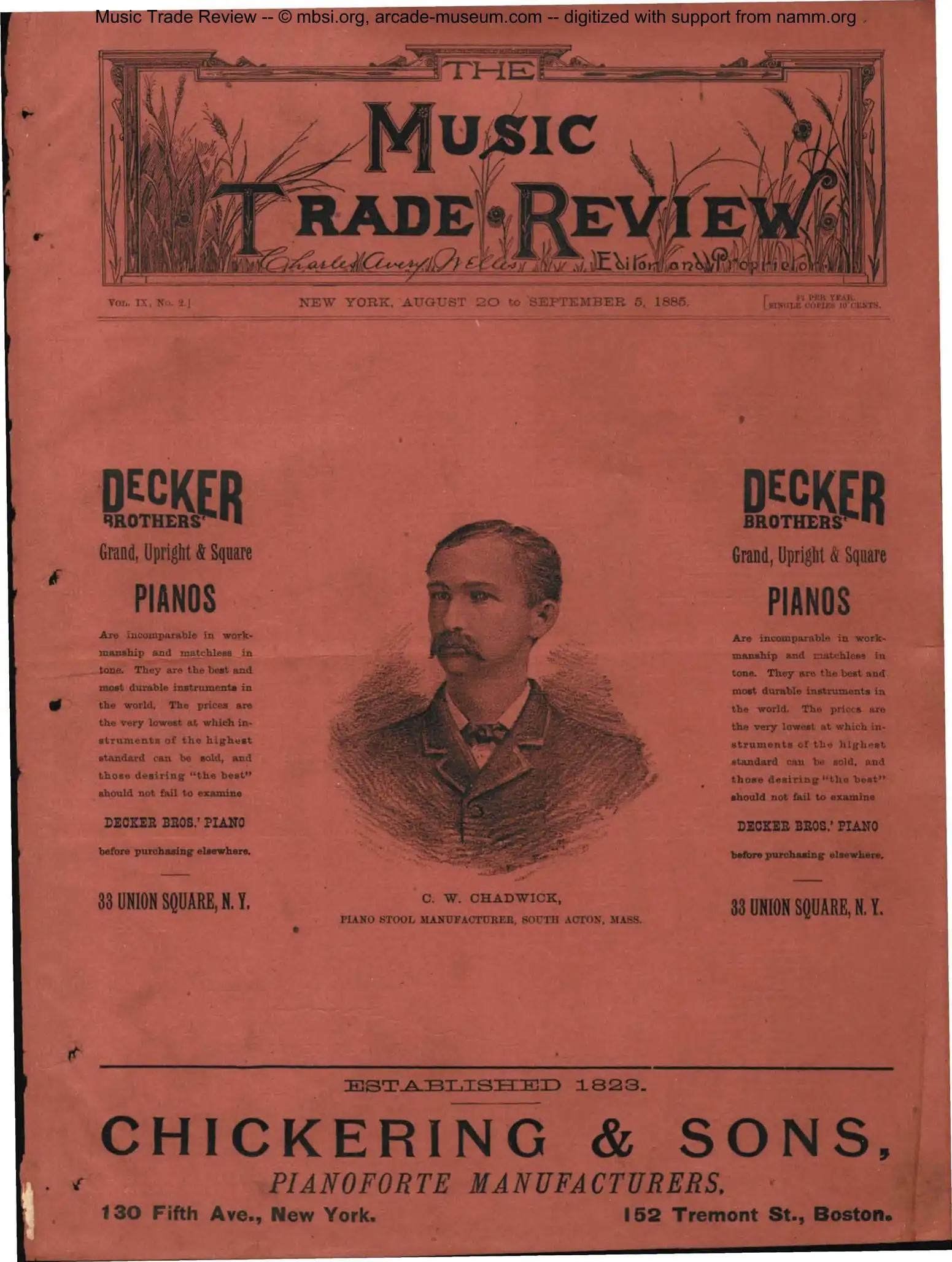
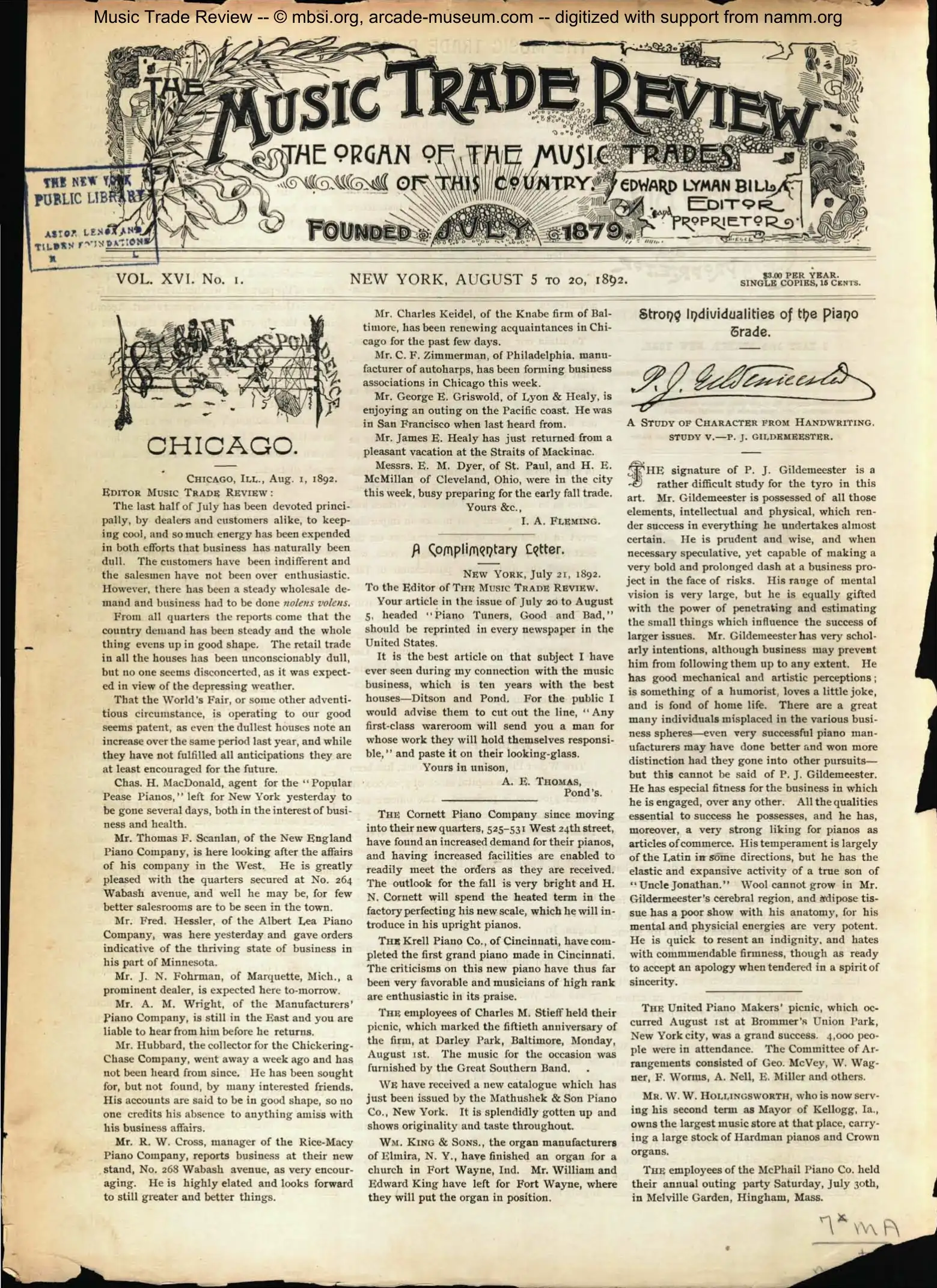
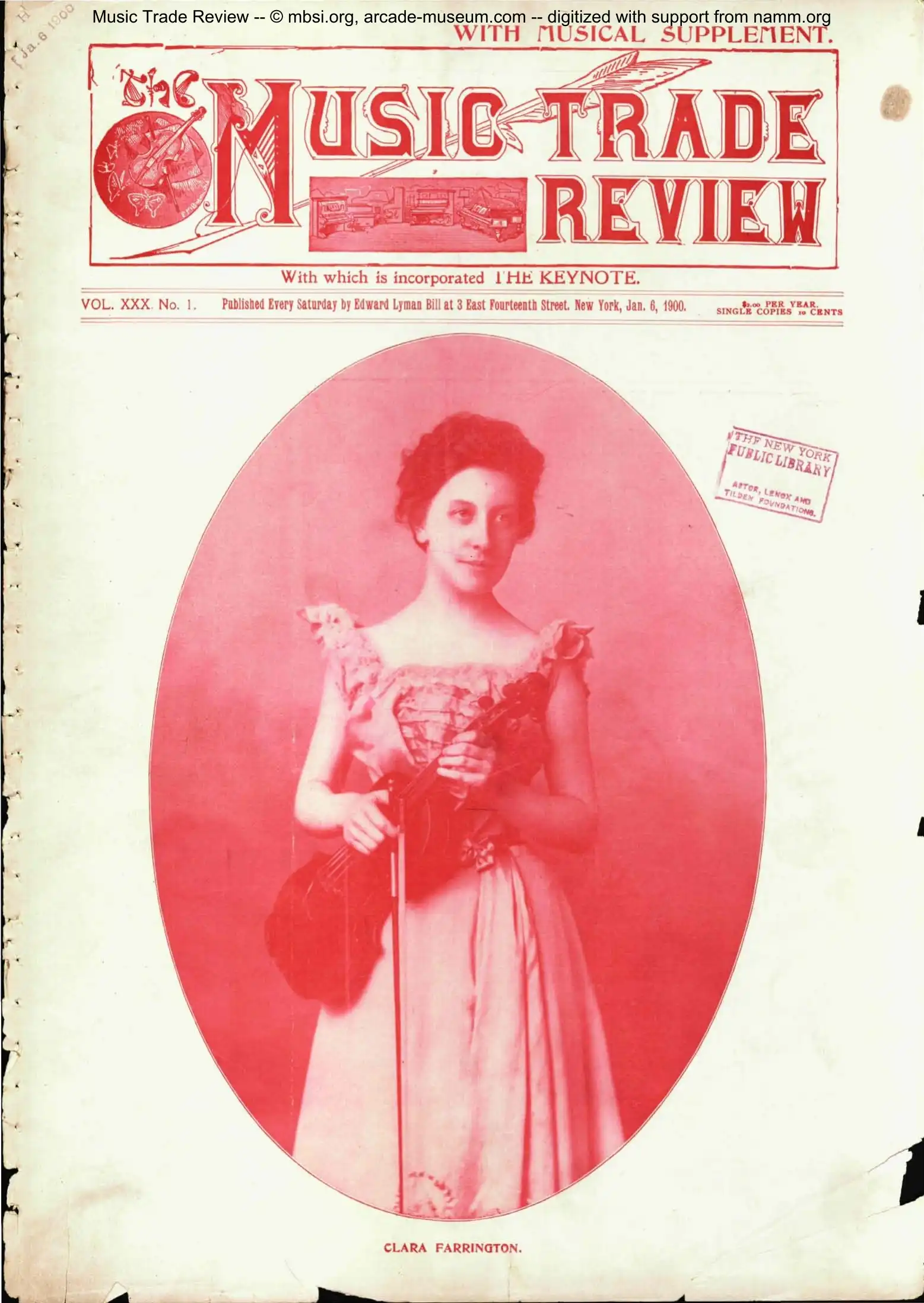
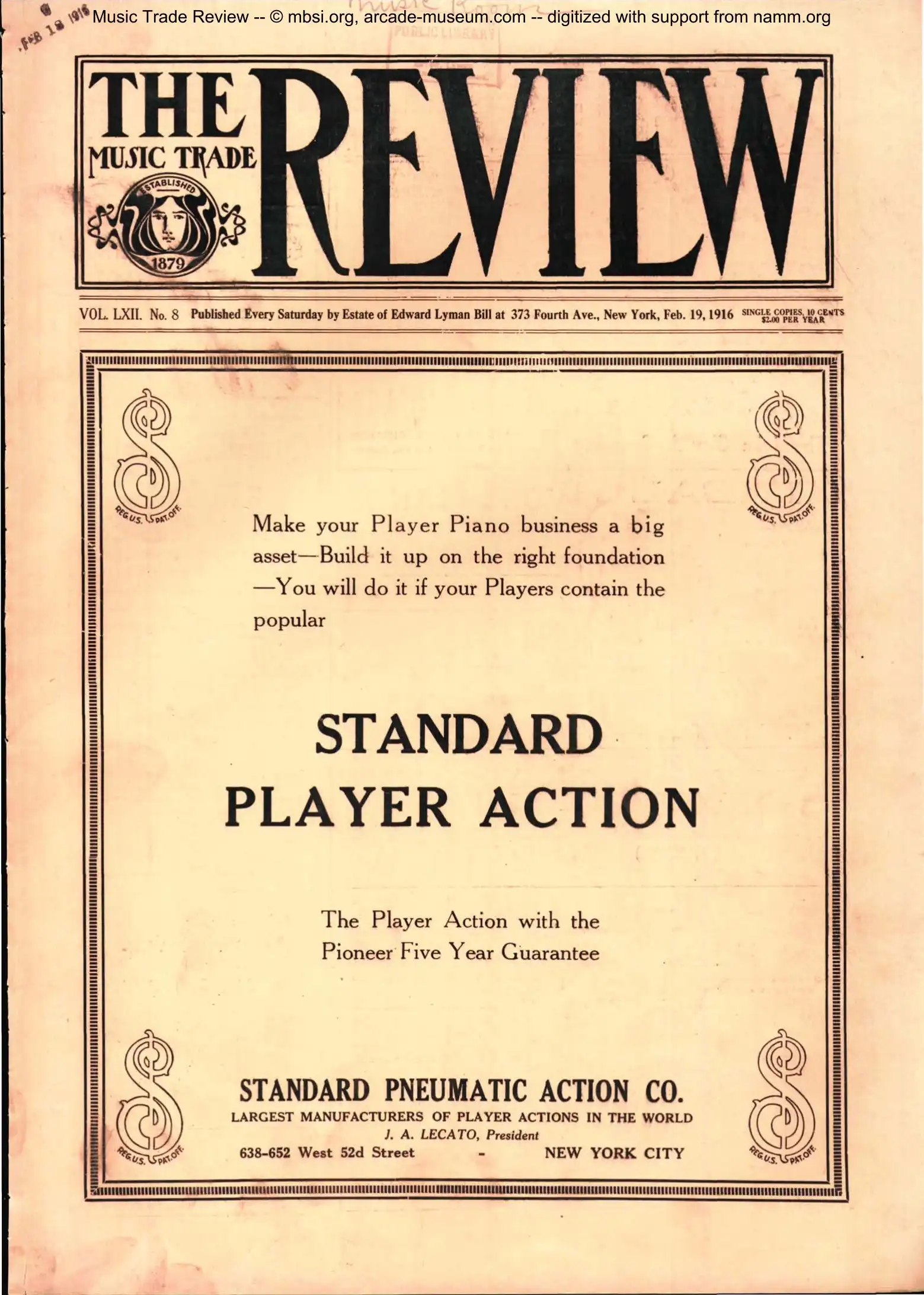
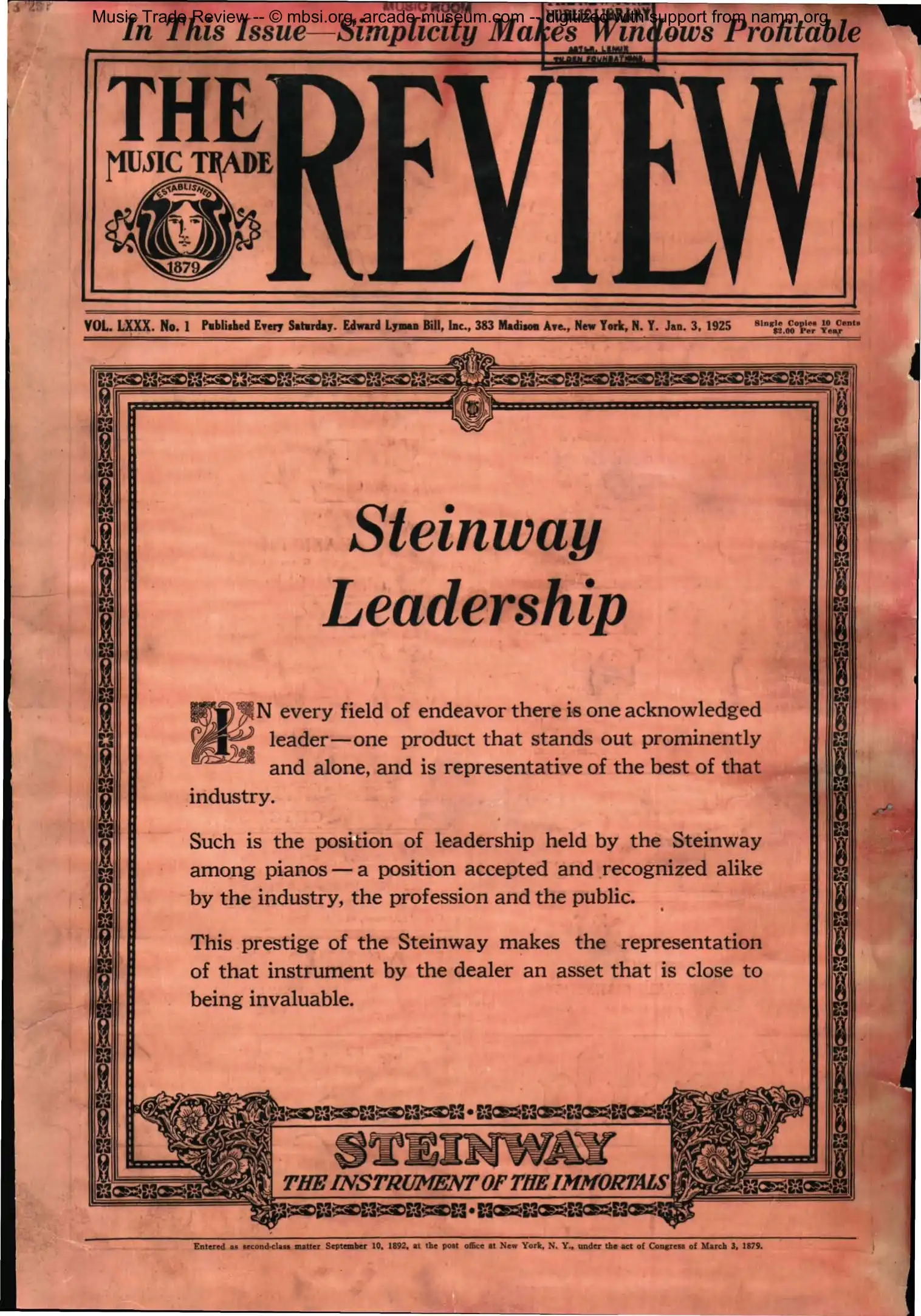
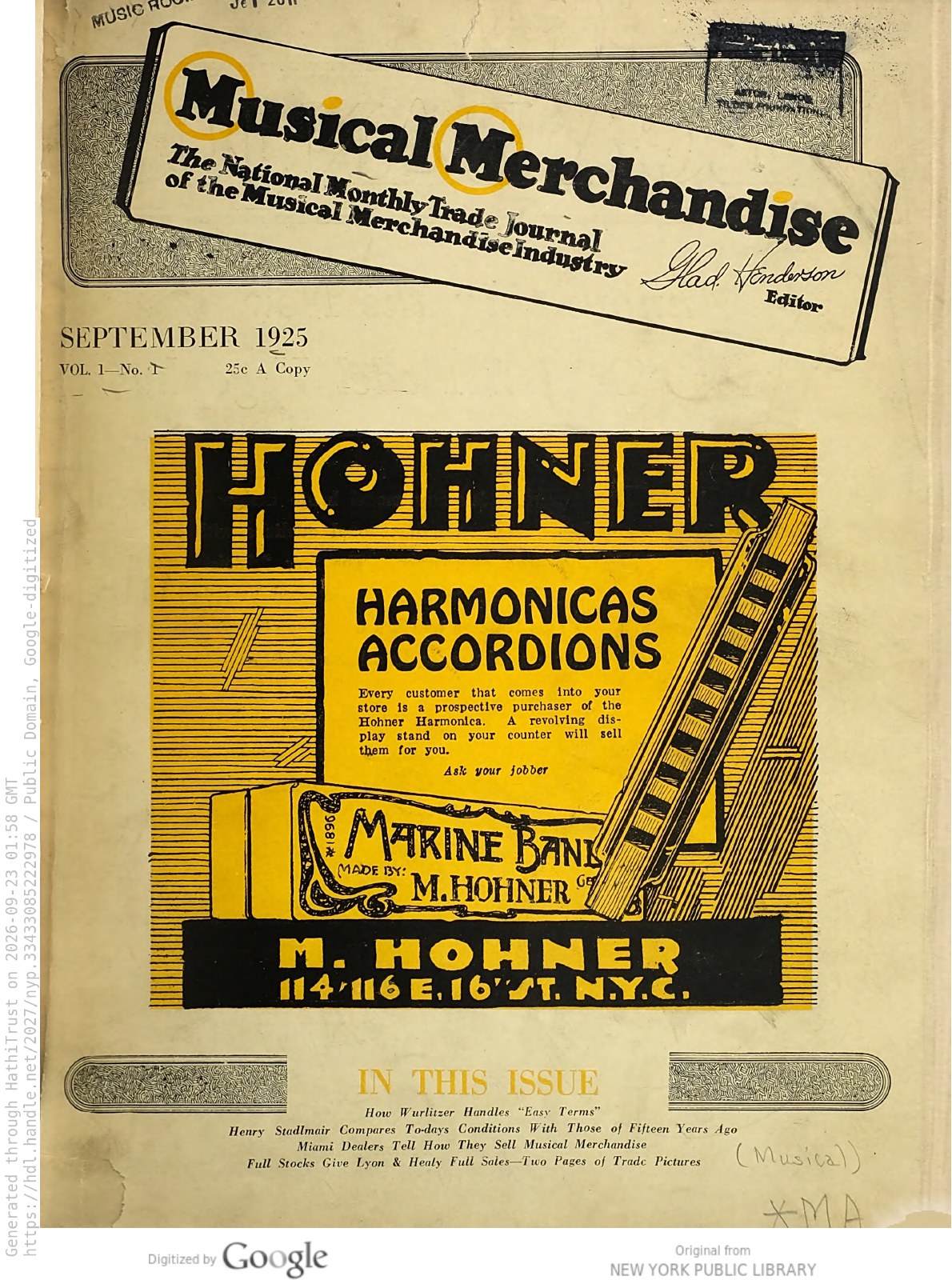
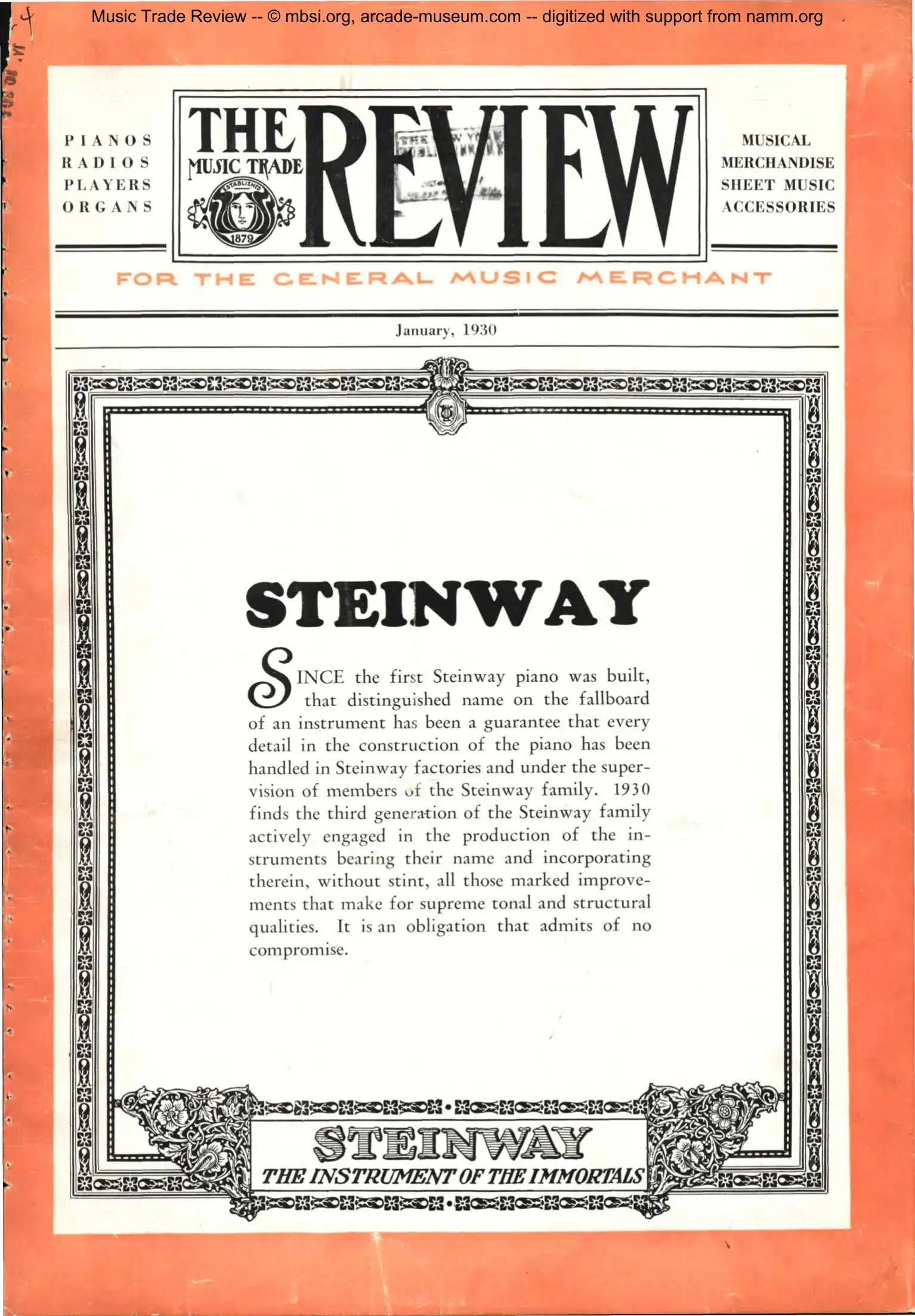
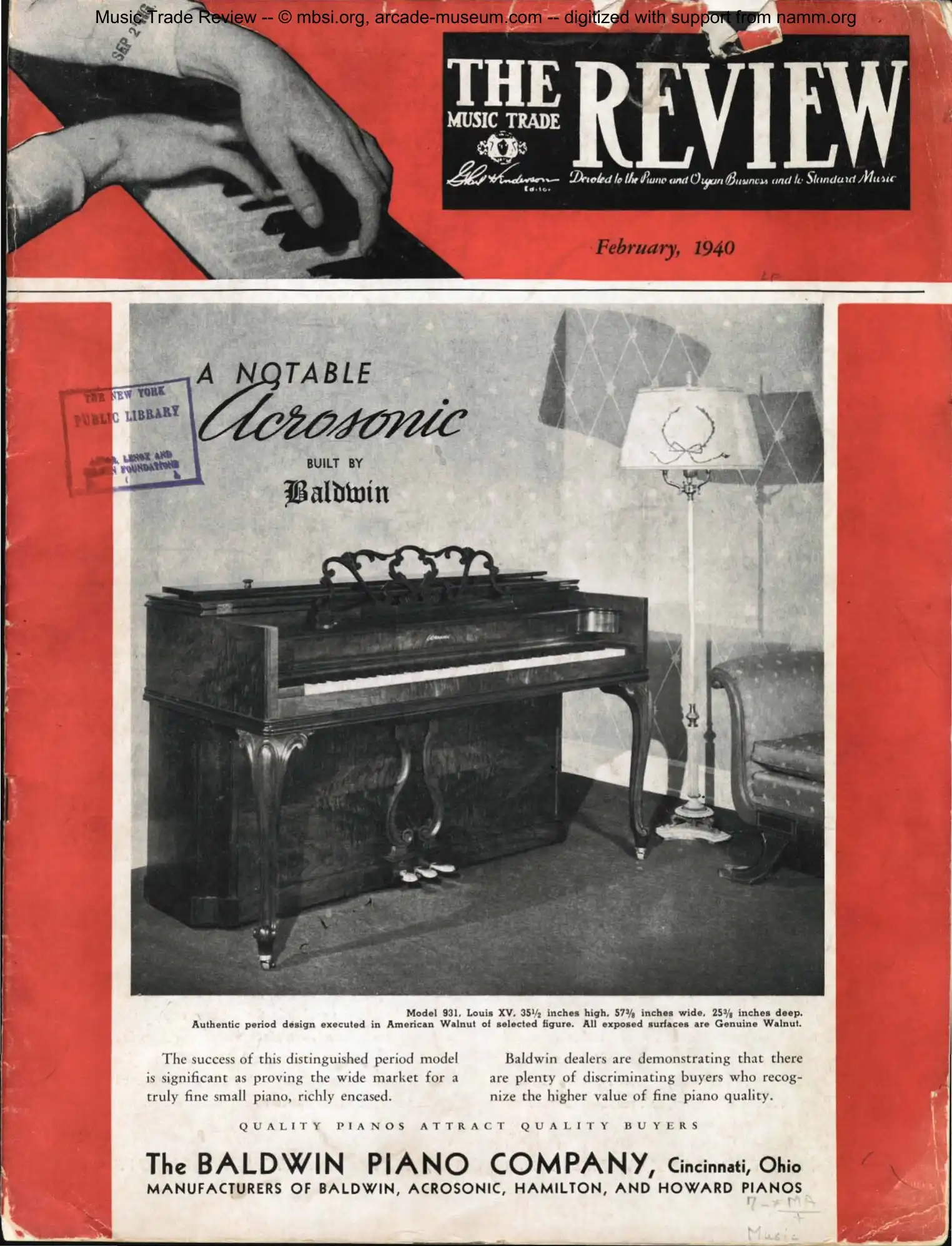
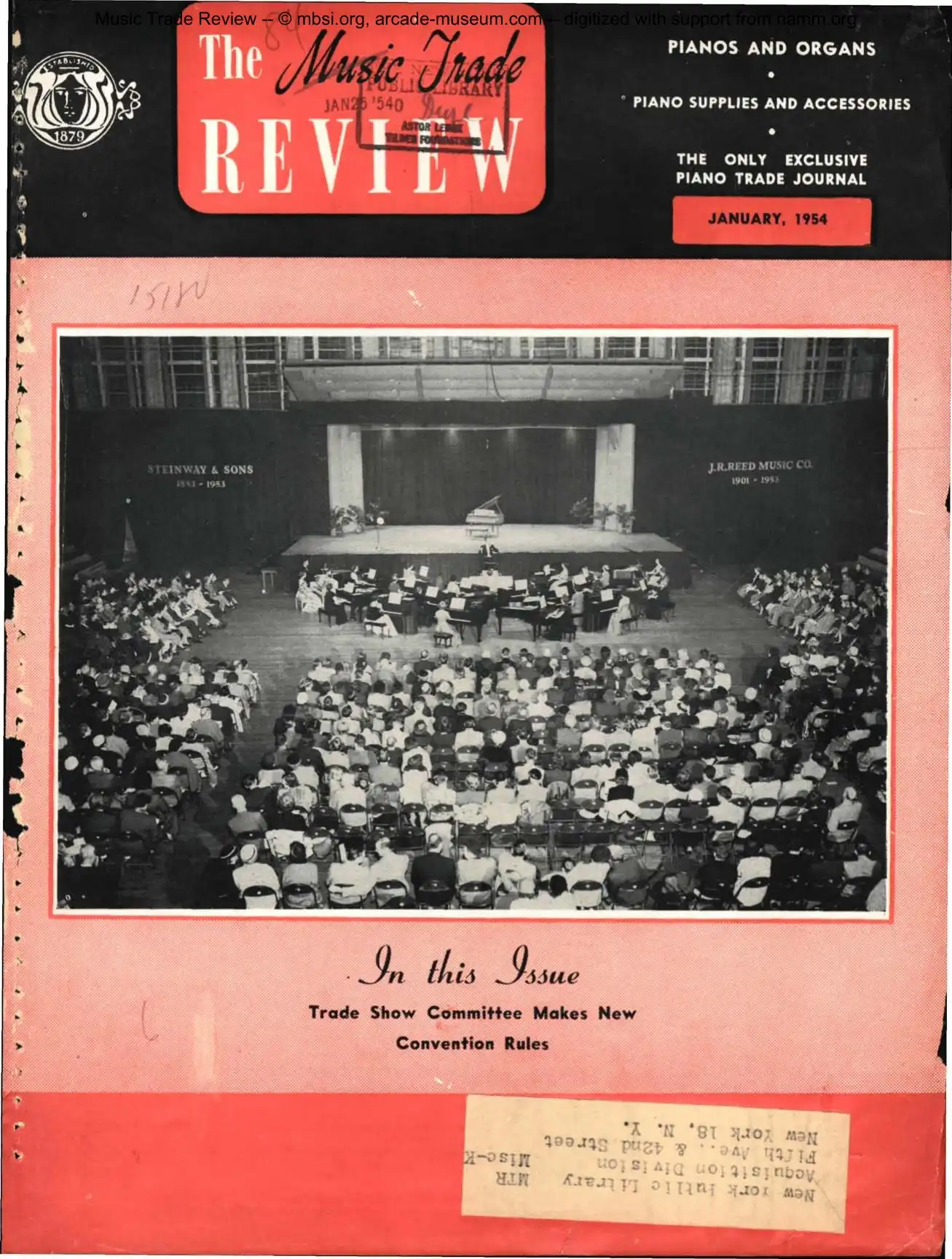
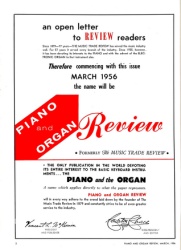
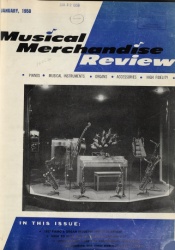
Historical Music Trade Review scans courtesy of the International Arcade Museum’s digital library and the Musical Box Society International, digitized with support from NAMM. Original scan credits are preserved. Explore the Music Trade Review collection.
The Sidney Davis era
A major new chapter began in the 1980s when Sidney Davis took ownership of MMR.
Davis strengthened the publication’s focus on the independent music retailer and expanded the kind of practical market information MMR provided to the trade.
One of his most important decisions was hiring Don Johnson, who would serve as MMR’s editor for more than 25 years.
Johnson became one of the most recognizable editorial voices in the music products business.
Under Davis and Johnson, MMR became known for its extensive dealer surveys, retailer reporting and market intelligence.
The publication regularly asked dealers what was selling, what was changing and where the industry was headed.
That connection to the dealer community became one of MMR’s defining strengths.
MMR also moved early into digital publishing.
Long before email newsletters became standard business communication, MMR launched what has been recognized as the music products industry’s first weekly electronic B2B newsletter, giving retailers and manufacturers a faster way to receive breaking industry news.
The publishing operation also expanded into music education.
Recognizing the direct connection between a healthy music products industry and strong school music programs, the company launched specialized education publications, including School Band & Orchestra, today known as SBO+.
That expansion connected two essential parts of the music ecosystem: the businesses that make and sell instruments and the educators who put those instruments into the hands of young musicians.
Christian Wissmuller and the MMR editorial tradition
MMR’s editorial continuity is one of the publication’s greatest strengths.
In 2001, Christian Wissmuller joined MMR.
A Boston University journalism graduate, musician and recording engineer, Wissmuller had written for music publications including Guitar Player and Guitar One before joining the MMR editorial staff.
He worked closely with longtime editor Don Johnson, who became both a mentor and an important influence on his approach to covering the music products business.
Following Johnson’s death in 2008, Wissmuller assumed leadership of MMR’s editorial operation.
He continues to serve as editor of MMR today.
Over more than two decades with the publication, Wissmuller has covered enormous changes across the industry: consolidation among manufacturers and retailers, the growth of e-commerce, the transformation of music education, the rise of software and digital instruments, changes in pro audio and recording, global supply-chain disruptions and the continuing evolution of independent music retail.
That continuity matters.
MMR’s editorial perspective is not built around chasing trends from one year to the next. It comes from decades of direct involvement with the retailers, manufacturers, distributors and people who make up the music products business.
Christian Wissmuller remains at the center of that editorial mission.
The Timeless Communications era
In 2013, media executive Terry Lowe and Timeless Communications Corp. assumed stewardship of MMR.
The publication joined a group that included major live-production titles such as PLSN and FOH, expanding MMR’s connection to the increasingly interconnected worlds of musical instruments, pro audio, live sound and production technology.
During this period, MMR continued to cover the core music products marketplace while adapting to the rapid migration of publishing from print toward digital distribution.
In 2014, Mike Lawson joined Timeless as editor of School Band & Orchestra (now SBO+) and associate editor of MMR.
One of the most significant acts of preservation in the publication’s history came in April 2021.
Timeless Communications donated its physical collection of MMR back issues to the NAMM Resource Center Archive in Carlsbad, California.
The collection includes issues dating to 1927, preserving nearly a century of reporting on music retailers, manufacturers, products, personalities and industry change for future researchers and historians.
The archive represents something few trade publications can claim: a physical record of generations of music industry history.
The artistpro era
In July 2021, ownership of MMR passed to music industry publisher, author and musician Mike Lawson through artistpro, LLC.
Lawson became publisher of MMR, while Christian Wissmuller remained editor, preserving the editorial continuity and institutional knowledge built over the preceding decades.
In 2022, retired U.S. Army Col. Thomas Palmatier became editor-in-chief of School Band & Orchestra, leading its transition to SBO+ and expanding its coverage to include all musical arts in education.
For Lawson, a former Grammy Trustee and longtime executive director of TI:ME (Technology in Music Education), acquiring MMR brought together several parts of a career spanning music, publishing, technology and the musical instrument business.
As a child, Lawson could not afford his first electric guitar. At age 10, he cut eight yards on a Saturday, earning just enough money to buy one.
Music magazines, instructional books and records became part of his education.
That fascination eventually became a career.
Lawson opened his first music publishing office on Nashville’s Music Row in 1991 and later worked in marketing, sales and artist relations at Gibson Guitar Corp.
His work at Gibson included projects associated with major artists and products, including the Jimmy Page Signature Les Paul, Gibson Nighthawk and Epiphone Jack Casady Signature Bass.
Over the following three decades, Lawson published more than 200 music books, instructional videos, directories, catalogs, periodicals, and related products, launching MixBooks, working with publishing organizations including, Hal Leonard, Alfred Music, and Thomson Learning.
He remained a working musician throughout, recording or performing with artists including Merl Saunders, Jorma Kaukonen, Bob Welch, Vassar Clements, Vince Welnick, Phil Keaggy and Jack Casady. His 1998 album Ticket to Fly, released on Saunders’ Sumertone Records label, featured Saunders, Kaukonen, Welch, Joe Louis Walker and Dennis Robbins.
As a recording artist, songwriter and multi-instrumentalist, Lawson brought a musician’s perspective to the publishing business — one that eventually extended to artistpro’s deep engagement with music creators, audio professionals and the entire MI retail pipeline.
With this rich industry background, Lawson’s vision for the company aligned naturally with MMR’s historic mission, establishing artistpro Media as a forward-thinking standard-bearer for the music products trades.
His decades of work across the instrument, publishing and music technology communities eventually came full circle with the launch of the Pearl River Mike Lawson Signature Series Handmade Guitars at NAMM.
artistpro acquired MMR together with its music education sister publication, School Band & Orchestra, now SBO+.
The result is a publishing platform that covers both sides of the musical instrument ecosystem: the people who make and sell music products and the educators and programs helping create the next generation of musicians.
The next chapter is still being written
MMR’s history is more than a collection of old covers. It is a foundation for the reporting we do now. Generations of music businesses appear in these pages; today’s retailers, manufacturers and music makers are writing the next chapter with us.
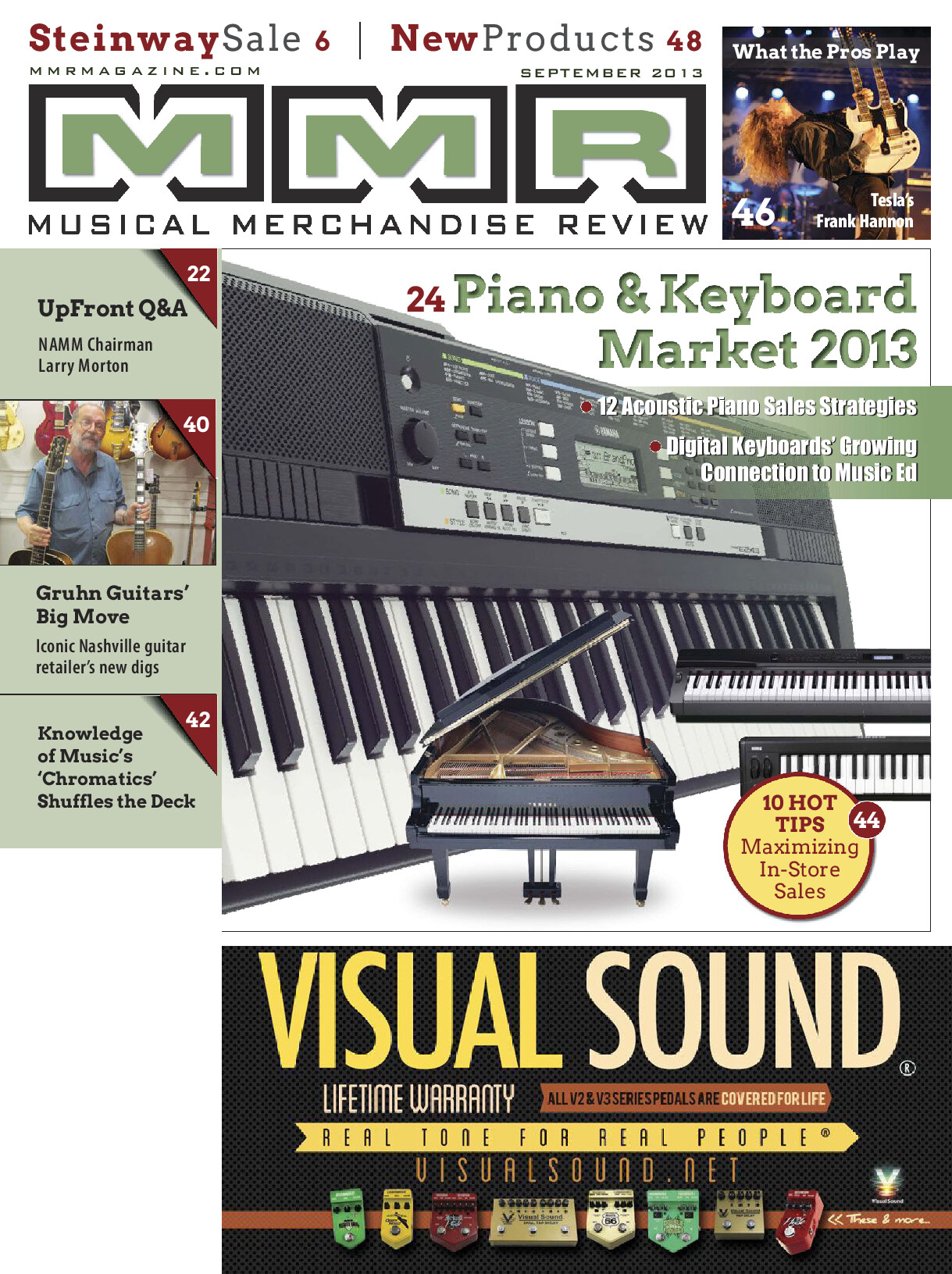

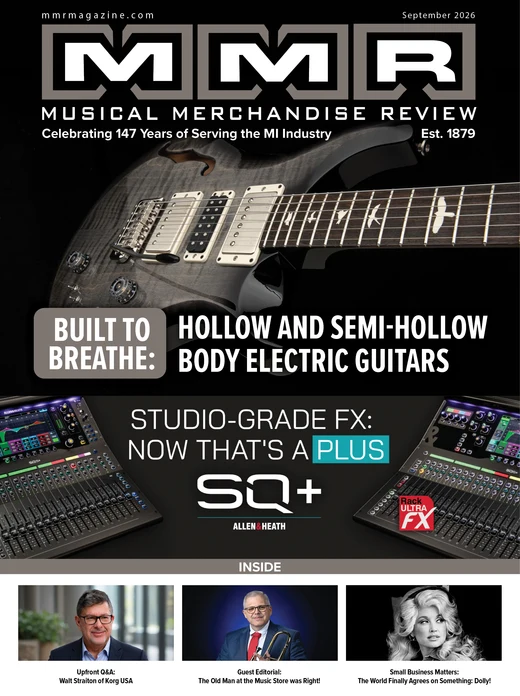
The unrivaled voice of the MI industry
Today, MMR stands as one of the most established and widely read independent voices in music products media.
With a reach of more than 14,000 industry professionals, MMR connects manufacturers, retailers, distributors, educators and music industry leaders across the market.
Alongside its music education sister brand, SBO+, MMR anchors a growing publishing and market intelligence ecosystem spanning music products retail, manufacturing, distribution, education, technology and the professional music community.
Powered by artistpro’s MediaManager platform and proprietary Spatial Intelligence AI systems, MMR combines 147 years of institutional trade knowledge with modern audience analytics, digital creative deployment and data-driven media planning.
The mission remains the same as it was in 1879:
Serve the people who make the music products industry possible.
MMR today
The music products business has changed dramatically since 1879.
So has publishing.
MMR today is no longer defined by a single monthly magazine.
It is a continuous digital publishing platform covering manufacturers, retailers, distributors, products, people, technology, finance, trade shows, acquisitions, education and the global music products marketplace.
MMR’s audience includes more than 14,000 music industry professionals, and its online archive contains more than 15,000 published stories.
The publication has also been online for approximately 30 years, giving MMR a digital publishing history almost as remarkable as its print heritage.
Under publisher Mike Lawson and editor Christian Wissmuller, MMR combines nearly a century and a half of institutional history with modern digital publishing, audience analytics and market intelligence.
MMR and SBO+ operate together under artistpro Media, creating a connected information platform serving the commercial music products industry and the music education community.
The dealer’s voice
One principle has remained central to MMR for generations:
Listen to the dealer.
Independent music retailers remain the front line of the music products business.
They see what customers ask for.
They know what products move.
They recognize emerging trends before those trends appear in market reports.
And they understand how changes in the economy and culture affect musicians at the local level.
MMR has long made dealer feedback a central part of its editorial identity through retailer surveys, market reporting, interviews and industry research.
That tradition continues today.
Dealers’ Choice Awards
MMR’s annual Dealers’ Choice Awards give music retailers a direct voice in recognizing the instruments, products and companies they believe have made an impact on the marketplace.
Unlike awards selected exclusively by editorial committees, the Dealers’ Choice Awards are rooted in the opinions of the people selling music products every day.
The awards have become one of MMR’s most recognizable annual traditions and another expression of a principle the publication has followed for generations:
The dealer’s voice matters.
MMR and SBO+
MMR’s relationship with SBO+ reflects a larger belief about the music products business.
The future of the industry depends on creating musicians.
School music programs, educators, booster organizations, private teachers, retailers and manufacturers are all part of the same ecosystem.
MMR covers the commercial side of that ecosystem.
SBO+ covers the educational side.
Together, the two publications connect manufacturers, dealers, educators, parents, programs and communities around a shared goal:
Helping more people become lifelong musicians.
Technology and market intelligence
Today’s publishing business requires more than producing articles and sending newsletters.
Under artistpro Media, MMR is supported by technology designed to provide a more complete understanding of its audience and the music products marketplace.
That begins with MediaManager, artistpro’s publishing, advertising and audience-management platform, and extends into proprietary Spatial Intelligence AI systems capable of analyzing the geographic relationships among retailers, educators, music programs, manufacturers and markets.
Combined with MMR’s first-party audience data and decades of industry knowledge, these systems give manufacturers and industry partners tools for more informed media planning, audience targeting and market analysis.
The goal is straightforward:
Use better technology and better data to make music industry media more useful.
Not more complicated.
147 years later
Few industries resemble what they looked like in 1879.
The music products business certainly does not.
The piano factories and independent merchants of the 19th century eventually gave way to electric guitars, synthesizers, recording technology, digital instruments, software, e-commerce and an increasingly global marketplace.
Retail changed.
Manufacturing changed.
Music changed.
Publishing changed.
MMR changed with all of them.
But its fundamental purpose did not.
MMR exists to document the people, products, companies and ideas that move the music products industry forward.
For 147 years, generations of publishers, editors, writers, manufacturers and retailers have contributed to that record.
From independent storefronts and global manufacturing lines to the annual Dealers’ Choice Awards, MMR continues to fulfill the mandate that began in 1879.
We don’t just write about the history of the music business — we publish it.
MMR timeline
1879
Music Trade Journal, founded by Charles Avery Welles in New York, is documented as the earliest title in MMR’s predecessor lineage.
1880s
The Welles publication continues through Musical Critic and Trade Review and then Music Trade Review; an 1885 issue names Welles as editor and proprietor.
1891
A surviving Music Trade Review masthead identifies Edward Lyman Bill as editor and proprietor of the Welles-line publication.
1925
Glad Henderson launches Musical Merchandise.
1927
Beginning of the surviving physical MMR archive later donated to the NAMM Resource Center.
March 1956
Music Trade Review becomes Piano and Organ Review.
1958
Musical Merchandise Magazine and Piano and Organ Review merge to form Musical Merchandise Review, continuing the older publication’s numbering with volume 117.
1980s
Sidney Davis takes ownership of MMR and hires longtime editor Don Johnson.
1990s–2000s
MMR expands its national dealer research and launches the music products industry’s first weekly electronic B2B newsletter.
2001
Christian Wissmuller joins MMR.
2008
Following the death of Don Johnson, Christian Wissmuller assumes leadership of MMR’s editorial operation.
2013
Terry Lowe and Timeless Communications Corp. assume stewardship of MMR. Wissmuller continues leading MMR’s editorial coverage as the publication expands its digital presence.
2014
Mike Lawson joins Timeless as editor of School Band & Orchestra (now SBO+) and associate editor of MMR.
April 2021
Timeless Communications donates its physical MMR archive, including issues dating to 1927, to the NAMM Resource Center.
July 2021
Mike Lawson and artistpro, LLC acquire MMR and its sister publications.
2021–Present
MMR and SBO+ develop as interconnected artistpro Media platforms combining industry journalism, music education coverage, audience data, market intelligence and digital publishing technology.
2026
MMR marks 147 years of publishing heritage through its predecessor titles and approximately 30 years of publishing online.