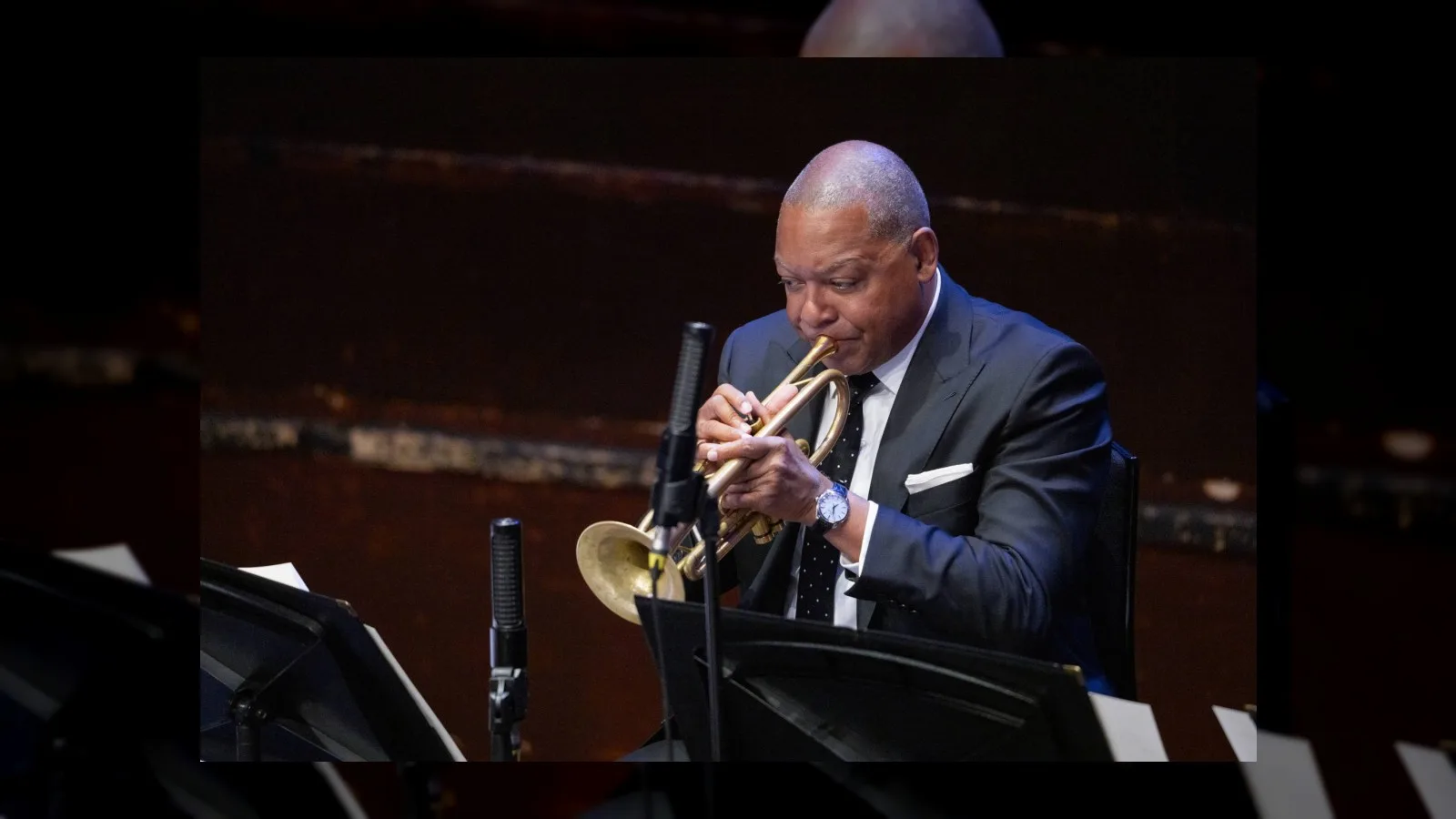
Johnathan Smith, production manager and front-of-house engineer for the Jazz at Lincoln Center Orchestra with Wynton Marsalis, relies on a lineup of AEA ribbon microphones to create cohesive mixes while preserving the ensemble’s natural detail. From performances at Frederick P. Rose Hall in New York to stages around the world, Smith utilizes the R88A, N8, and KU5A models.
During a recent six-show tour through Scotland and Ireland, Smith used the AEA R88A, N8 and KU5A to preserve the orchestra’s natural interaction in both the front-of-house mix and multitrack recordings. The orchestra’s 15 musicians often play acoustically onstage, listening to one another and establishing their own balance.
Smith adopted the R88A when recording an archival recording for the Wynton Marsalis Septet. He placed the stereo microphone in front of the group, noting, “The reach of the two ribbons in that Blumlein pair was phenomenal. It had great bass and a very pleasing, realistic sound.” The R88A also feeds Smith’s front-of-house mix, adjusting to varying venue acoustics.
In dense big-band arrangements, the tonal differences between brass mutes can be subtle. Smith found that some ribbon microphones softened those distinctions too much. “With the N8, all that texture suddenly came back. It was like, oh my goodness, this is the sound that I have been looking for,” he said. During a performance of Marsalis’s “All Rise” at the Edinburgh International Festival, Smith placed four N8s across the first violin section, second violins, violas and cellos. “It allowed the strings to become much fuller without sounding noticeably spot-miked,” Smith explains.
When miking the trumpet section, Smith positions four N8s roughly two to three feet from the musicians. He angles the figure-of-8 nulls toward the trombones to limit bleed. “With the N8s, because they have so much reach, you still get that bottom end and a nice amount of the top end, which is just right,” Smith said.
The KU5A’s supercardioid pattern helps isolate the upright bass, which sits near the piano, brass, drums, and saxophones. “It isolates right on the bass player, but it is still so natural,” Smith said. “There is enough high end that you still get the sound of his fingers and the fullness of his instrument.”
Smith finds the N8s and KU5A have become regular parts of his microphone setup. “It helps blend everything and make a really nice, cohesive sound,” Smith said. “It almost sounds like a live album.”
For more information, visit aearibbonmics.com.