
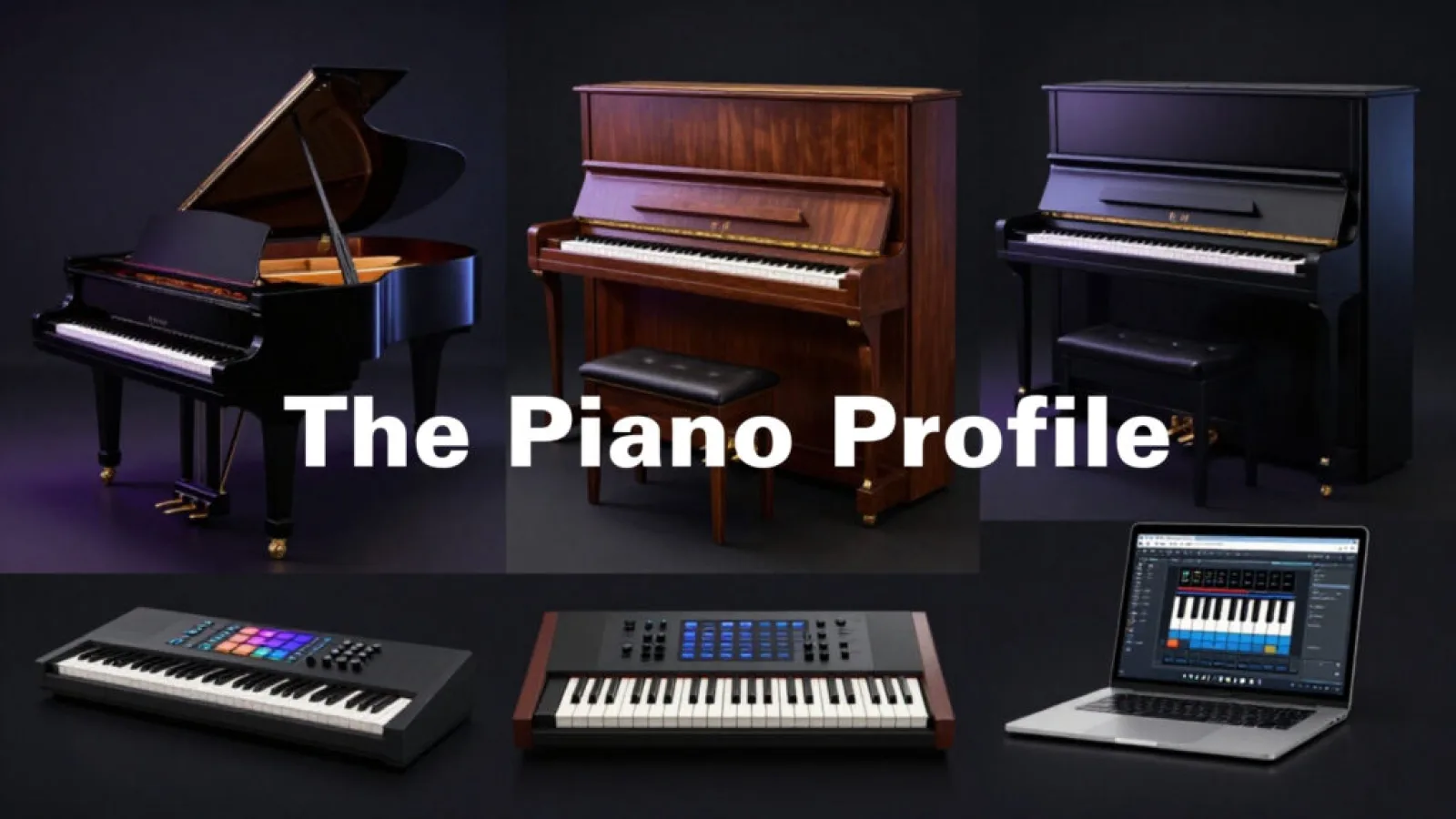
A unified approach to representing piano performance data across various instruments is now available, according to a joint announcement from the MIDI Association and the American Musical Equipment International (AMEI). This new standard aims to ensure that musical nuances are accurately transmitted when a piano performance moves from one device to another.
According to the MIDI Association, the Piano Profile represents a significant accomplishment that has been developed over several years. It encompasses a broad range of piano-related technologies, including acoustic player pianos, digital pianos, software instruments, and digital audio workstations. The collaborative effort between these groups provides a common framework for how piano data should be handled.
The Piano Profile addresses a long-standing inconsistency in how MIDI data represents piano performance. While MIDI has always been capable of indicating which notes are played and their relative intensity, the interpretation of that intensity has varied significantly between different instruments. The new standard intends to resolve this, preserving the intended musical expression.
The piano’s central role in Western music, spanning genres from classical to popular music, underscores the importance of this development. The shared agreement on piano performance data aims to improve consistency and accuracy across the entire spectrum of piano-related technologies.
For more information, visit midi.org.