Founded as a collaboration creatively combining the real-world experience of veteran mix/mastering engineer Sean J Vincent and advanced world-leading DSP (Digital Signal Processing) developments of Vic Lewis of Fazertone, famed for being one of the first companies to emulate analogue gear using neural networks, plug-in developer THE/AUDIO/FIRM is proud to announce availability of FURNACE — forging its inaugural plug-in as a red-hot, three-way saturation processor with mid-side processing — as of December 8…
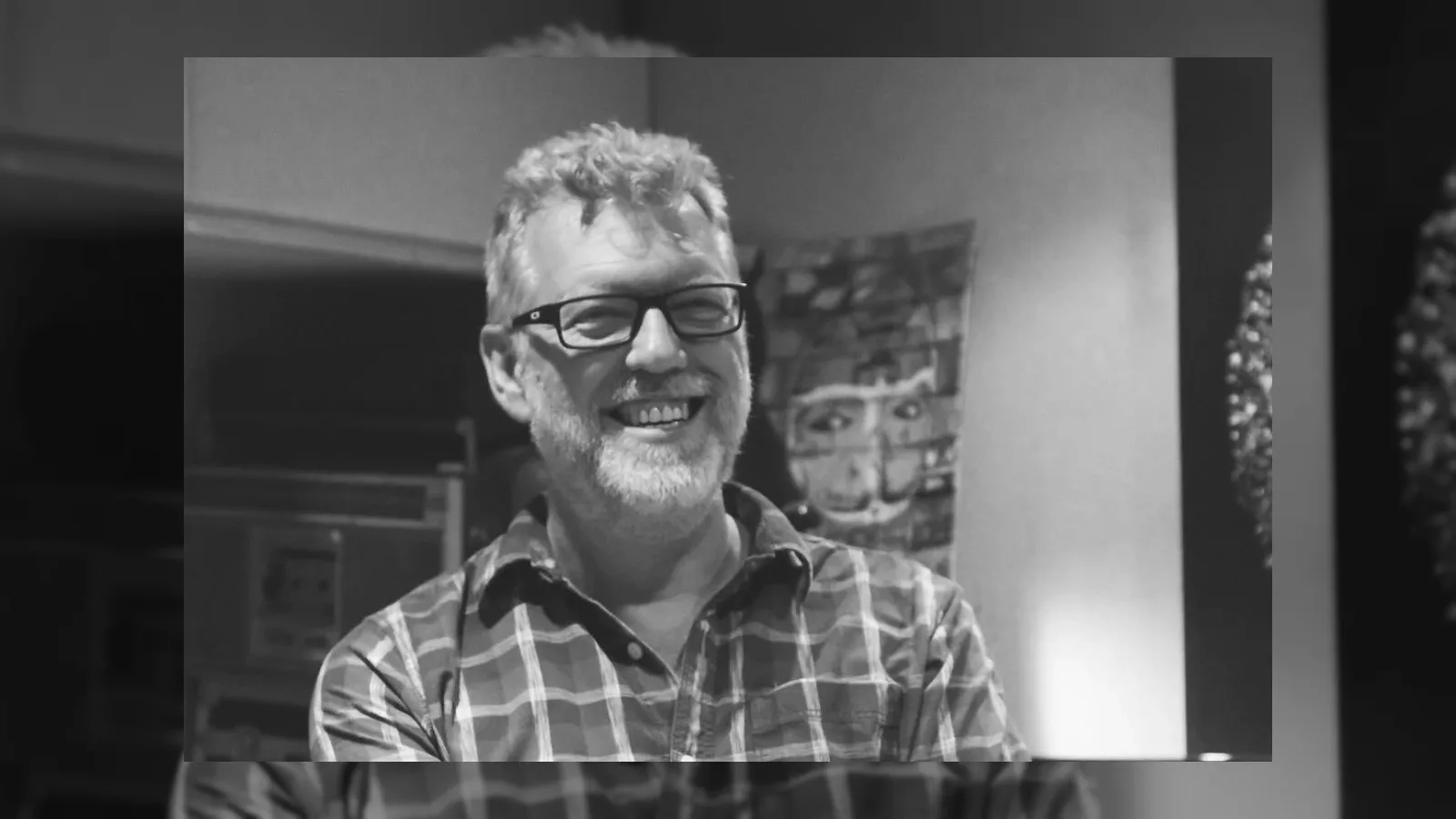
Its inaugural plug-in has, admittedly, taken time to come to fruition, as attested to by THE/AUDIO/FIRM company co-owner Sean J Vincent: “It’s been coming for ages; about two years ago, I approached a bunch of different plug-in companies with some ideas. I had protracted conversations with a few of them; I started working with one of them for a bit, but we couldn’t really agree on how I wanted this thing to be — it just wasn’t going in the direction I wanted it to go, so I called a halt to it.
But I kept my ear to the ground; I was looking for someone I could work with in a much smaller way to just create something exactly as I wanted, and earlier this year I met such a developer — Vic Lewis from Fazertone, who makes fantastic guitar pedal emulations. We had a chat and realised we both wanted to do the same thing. He was very open to my ideas; I was very open to his way of working. We got on straight away, and just got on with it.
We have a range of plug-ins coming; we’ve been working on this all year, and the first one is ready right now.”
Needless to say, FURNACE makes much use of Fazertone’s famed DSP developments, delivering the authentic sound of tape, transformers, or tube saturation taken directly from real iconic gear and modelled with custom real-time neural networks, forged into a single, red-hot plug-in. Photorealistic in its execution, FURNACE’s gorgeous GUI (Graphical User Interface) is as easy on the eye as it is in use: ultimately, engaging the 456 button realistically replicates analogue tape saturation — captured using a real ½-inch tape machine running Ampex 456 tape; TFM replicates transformer saturation — captured using a pair of 1084 input stages… plus a ‘mystery’ transformer on the output; and AX7 replicates valve/tube saturation — captured using a pair of 12AX7 long-plate tubes running into a Lundahl transformer stage.
All are different, sounding just like they should. “We designed the 456 — the tape emulator — so that, no matter what you do with the DRIVE, it’s never going to completely pop off and go nuts; this is designed to sound like tape — not tape being destroyed, so if you set the DRIVE, let’s say, at nine o’clock and the MIX full up, it’s going to sound very subtly like tape.” So says Sean J Vincent, who — with 35 years of sound engineering experience to his notable name — should surely know what he is talking about!
And there are a number of other choice controls with which discerning users can further shape their sound, such as the Xbutton — adds a small amount of transformer warmth and an EQ curve with a slight side push on the highs; indeed, it can even work on its own with no other settings touched — ideal for individual instruments, rather than buses. Beyond that, the MID SIDES (m/s) control allows anyone to focus the saturation anywhere in the stereo field, while the HI BOOST switch provides a little higher frequency boost when needed.
For more information, visit fazertone.com.