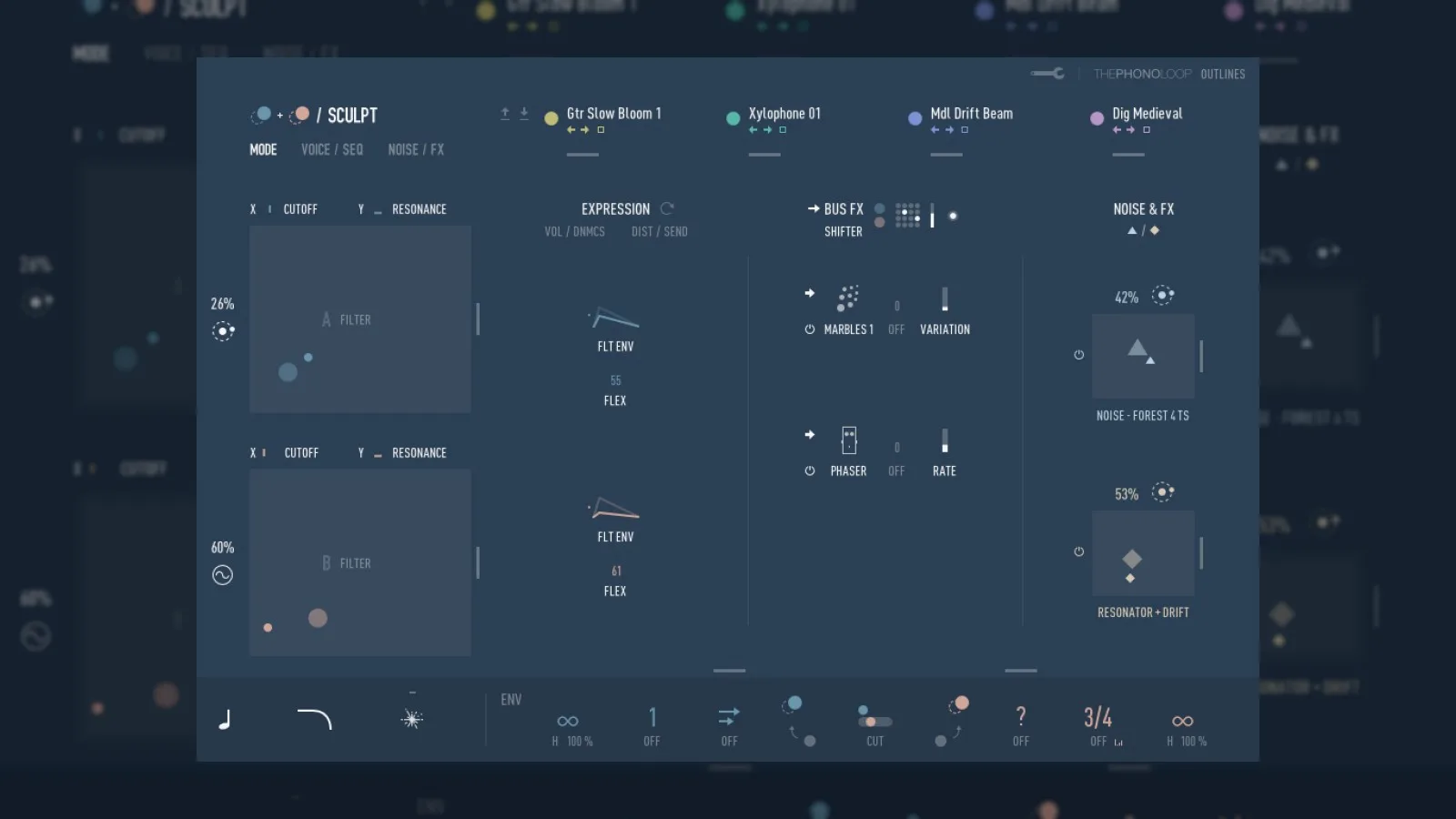
Thephonoloop is proud to announce availability of outlines as its latest NKS (Native Kontrol Standard) ready VI (virtual instrument) for Native Instruments’ Kontakt Player free sample player — beautifully blending raw acoustic gestures with tape loops and modular-processed tonal experiments to spark musical momentum as the sample-based instruments with character-producing Polish two-person team’s approach to a collection of tonal variations designed to be combined and explored, each preset being an outline of a musical idea ready to be expanded and reshaped into something larger — as of March 12…
As an outline of a musical idea ready to be expanded and reshaped into something larger, each preset propelling outlines’ openly creative collection of tonal variations duly designed to be combined and explored is a result of Thephonoloop spending some serious time gathering suitable source material — think ACOUSTIC (119 sources), MODULAR (139 sources), SYNTH (67 sources), TAPE LOOP (65 sources), VARIOUS (six sources), and many more besides, focusing on texture, detail, and contrast, creating a wide range of acoustic and synthetic sounds that can interact and form unexpected combinations.
Creatively speaking, flutes, mallet instruments, strings, and other small acoustic sources were recorded up close to capture the subtle gestures of the instruments concerned. Thephonoloop took it slow in the process of doing so, taking time to uncover hidden gems and embrace happy accidents along the way, with air, creaks, field ambience, finger noise, and room ambience all treated as honorary guests rather than trespassers — the library would not have existed without them. These recordings were further blended with analogue and digital synthesis, modular experiments, and tape loops to form the palette of textures from which the sounds of outlines emerged.
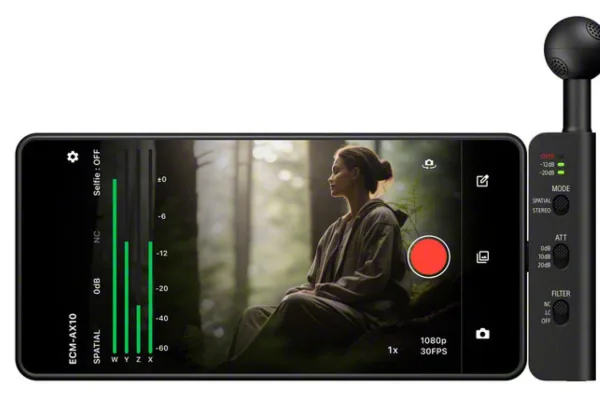
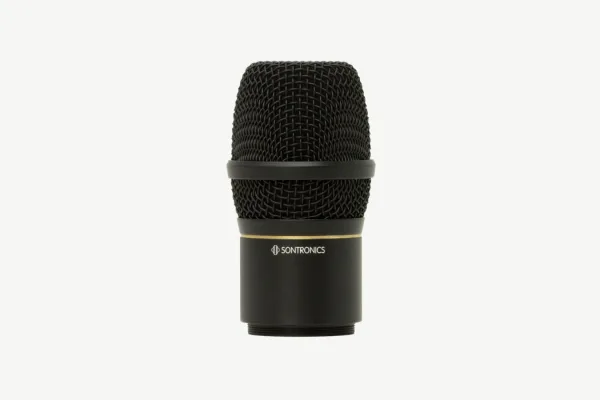
Experimenting with different microphones during the sessions themselves, Thephonoloop chose carefully, complementing the character of each instrument and the textures it wanted to capture. Indeed, it even deployed a pair of ultrasonic microphones capable of recording frequencies up to 100 kHz, producing results with exceptional detail. Much material was captured at 192 kHz, in fact, allowing the recordings to be significantly slowed down, readily revealing layers of resonance and texture that would otherwise have remained unheard.
Working with modular systems is a natural part of Thephonoloop’s production process, so bringing them into the creation of outlines was inevitable. After all, processing and resampling sound has long been part of its sonic language, adding another layer that complements and contrasts with the raw acoustic recordings.
Recording a separate set of acoustic material, these sounds — together with recordings of analogue and digital synthesisers — were mangled through delays, filters, granular processors, physical resonators, reverbs, and samplers. Since this process often pushed the material far beyond its original form, transforming it into evolving textures and tonal variations that sit somewhere between the source and something entirely new, every experiment helped shape outlines into what it became.
It is fair to say, though, that cassettes and tapes are another essential part of Thephonoloop’s DNA as one of the most inspiring ways to generate material that feels organic, slightly unpredictable, and full of subtle movement — often contrasting beautifully with the modular systems, raw recordings, and synthesisers. Working with real tape is something that Thephonoloop thoroughly enjoys doing — not only because of the sound it produces, but also because of the completely different workflow it invites. It demands attention and patience, but more often than not rewards that time with moments that are almost impossible to plan.
Put it this way: while all of those approaches are integral to outlines, ambience, noise, and subtle textures form another important layer of its palette, without which it would feel incomplete.
For more information, visit thephonoloop.com.