Waves Audio has released Atlas Reverb, a flagship algorithmic reverb plug-in designed to create depth, movement and musical space in mixes.
Atlas was developed around a new algorithmic engine and draws on the character of classic digital signal processing reverb units. Its collection of programs was designed and tuned by ear for tone, density, reflection behavior, modulation, depth and feel.
“When I found out that the Waves team were tuning this by ear, I was very intrigued, because that’s very much how the great reverbs came to be,” said mix engineer Chuck Zwicky, who consulted on the creation of Atlas and designed programs for it. “You can trust the fact that each space on Atlas has been created by someone who really knows what they’re doing. You might put it across something and then realize a whole new way of looking at a song.”
Rather than recreating a static space with impulse responses, Atlas generates reflections in real time so its reverbs can move and evolve with the source.
“Convolution reverb can capture a moment in a room,” said Shai Mantzur, Atlas product manager at Waves. “But with Atlas, we weren’t just chasing the sound of a room. We wanted its behavior — reflections that move and modulate as the music moves.”
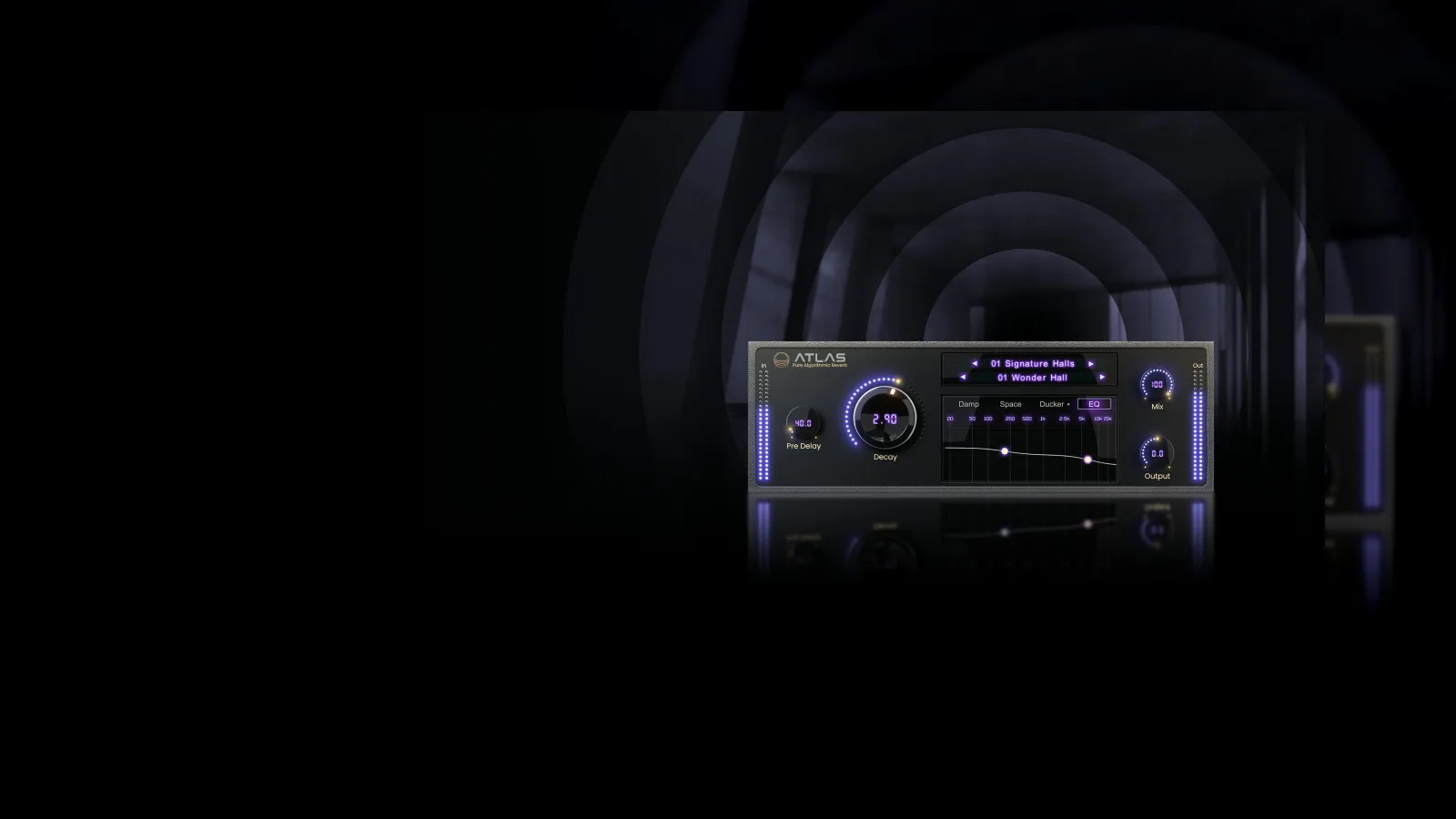
Atlas includes a streamlined program browser for auditioning different spaces and a focused set of controls for blending each reverb into a mix. Waves said the interface is backed by an algorithmic architecture with additional parameters designed to let producers make musical decisions without having to engineer the reverb.
“We wanted every program in Atlas to feel like a different musical decision, not just a variation on the same reverb,” Mantzur said. “The process was mainly listening — thousands of hours across songs, rooms and classic hardware devices — then refining until the reverb felt like it was part of the music. The goal is not for the listener to say, ‘The reverb is beautiful.’ The goal is for them to say, ‘I love that song.’”
The plug-in includes programs for vocal and instrument applications, including halls, rooms, chambers, plates, springs, signature halls and dreamscapes. It also includes Waves’ interpretations of digital reverb sounds used on records.
Waves said Atlas’ low-latency architecture and CPU efficiency are intended for both studio sessions and live mixing. Producer and mixer Greg Wells said, “It didn’t sound like a plug-in to me. I put it on the lead vocal, and it sounded like I was pumping it into the Ryman Auditorium.”
Front-of-house engineer Sean “Sully” Sullivan said, “Mixing in front of 60-plus thousand people every night, I need tools that do what I need without a lot of fuss, and Atlas does that easily. It’s CPU friendly; you can have several of them and not notice. It sounds great, and the preset list has some really amazing starting points.”
Waves Audio chief technology officer Meir Shashoua called Atlas a milestone among the company’s reverbs, citing Mantzur’s work in adding “a creative layer beyond the purist math.”
Atlas Reverb is available as a standalone plug-in and is included in the Waves Ultimate subscription and the Mercury, Pro Show and SD7 Pro Show bundles.
For more information, visit waves.com.